
You have no items in your shopping cart.

Shower door ranking benchmarks by keyword type split a shower door site's search performance into six buckets: cost, comparison, alternatives, parts and seals, cleaning, and installation. This page defines each bucket, what to measure in it, and which one to fix first in 2026.
A blended average position tells you nothing. A page ranking third for a cleaning query and a page ranking 40th for a cost query average out to a number that describes neither.
Shower door queries behave differently by intent. A homeowner searching for a replacement sweep wants one part. A homeowner searching for frameless door pricing is weeks from a purchase decision. Treating them as one pool leads to the wrong fixes.
Showerdoor has been a family owned and operated business since 1945, and its content already covers every bucket below. The benchmark is a way to see which clusters earn page-one slots in 2026 and which do not.
There is no single average ranking for shower door keywords. The benchmark that matters is your position per keyword type, compared against your own previous period.
Page one on Google holds 10 organic results. Your target in every bucket is the same: get the buckets you control into positions 1 to 10, then work the order inside it. For search volume by category, see the shower door search demand benchmarks.
The table sets up the measurement frame. Fill the metric column from your own Search Console export for the last 28 days, filtered by the query pattern in column two.
| Keyword type | Query pattern | Search intent | Metric to track | Showerdoor content cluster |
|---|---|---|---|---|
| Cost | how much does a frameless shower door cost | Late research, near purchase | Average position, clicks | Frameless shower door cost guide, price comparison pages |
| Comparison | Century vs a named competitor | Shortlisting vendors | Average position, CTR | Vendor vs vendor pages |
| Alternatives | competitor name plus alternatives | Leaving a vendor, open to switching | Average position, impressions | Alternatives pages by competitor |
| Parts and seals | frameless door sweep, bulb seal, handle | Fix a problem today | Average position, clicks to product pages | Replacement parts kits comparison, product pages |
| Cleaning | best cleaner, water stain remover | Care and maintenance | Average position, impressions | Cleaner, coating and squeegee guides |
| Installation | tub to shower conversion, curbless pan | Planning a remodel | Average position, impressions | Remodel workflow guides |
Read the table by intent, not by volume. Parts and seals queries are the most specific: sweeps come in lengths like 36 inches, seals in lengths like 90 inches, and glass in 1/4 inch, 3/8 inch, and 1/2 inch thicknesses. A page that states those specs exactly matches the query word for word.
Cost and comparison queries sit at the other end. They are contested by national manufacturers and retailers, and they convert only when the page carries a clear verdict.
Alternatives and comparison pages are narrow by design. Each one targets a single competitor name, so each has a small pool of queries but a buyer already close to a decision.
Cleaning and installation are the volume buckets. They bring in readers early, long before a quote request.
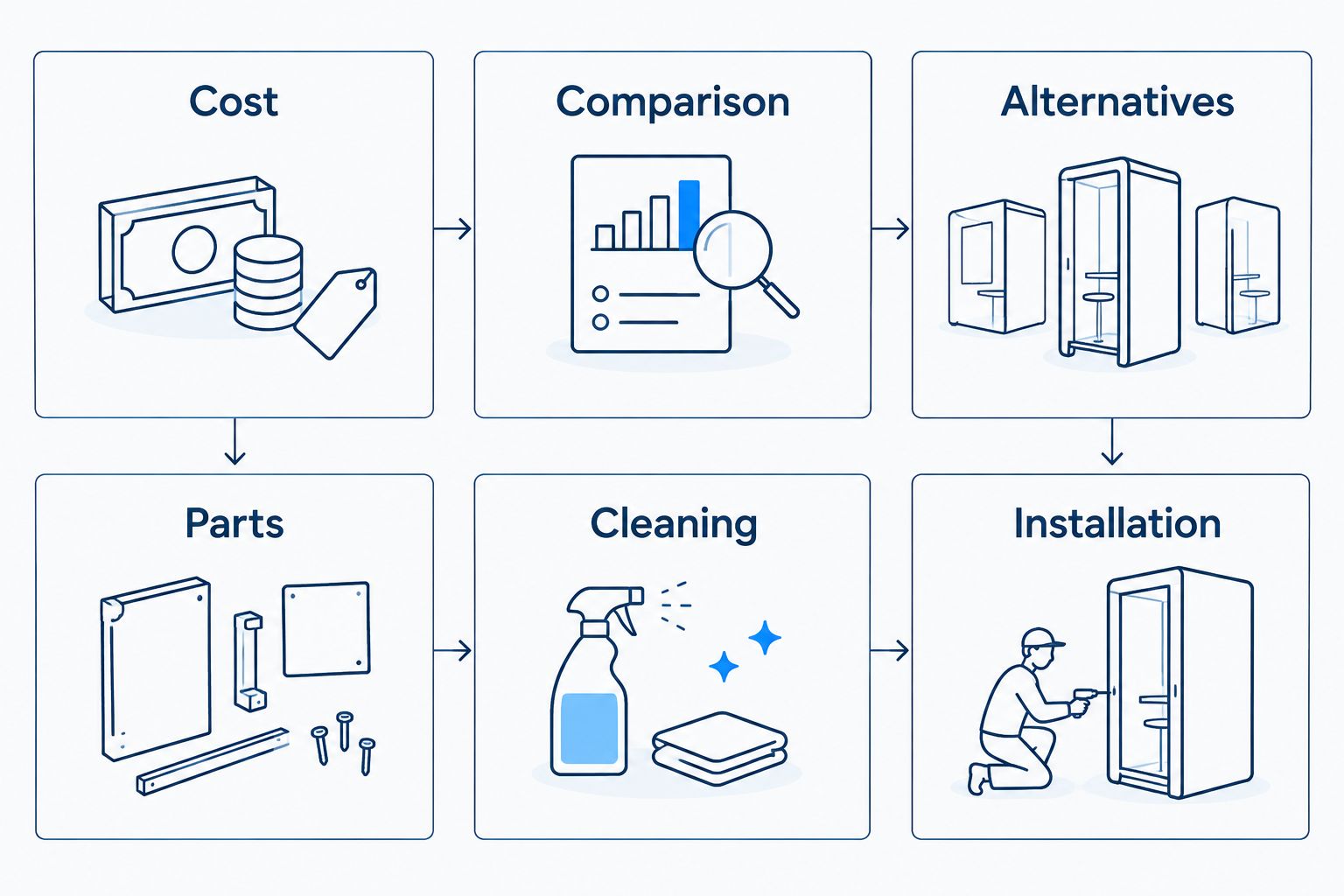
The figures to benchmark come from Google Search Console: queries and pages over a rolling 28-day window, grouped by the query patterns in the table. Position is the average of Google's reported position for each group, and the comparison point is the same group in the prior 28 days.
One limitation: Search Console shows only your own site. No public source gives a cross-brand average position by shower door keyword type, so the benchmark is self-relative. It tells you which bucket moved, not how you compare to every competitor.
A second limit is geography. Showerdoor serves homeowners in California, Arizona, and Nevada, and a national average hides where the real audience is.
What are shower door ranking benchmarks by keyword type?
They are average-position and click targets set separately for each kind of shower door query, such as cost, comparison, parts, cleaning, and installation. Separate targets show which bucket is underperforming.
What is a good average position for shower door keywords in 2026?
Page one, positions 1 to 10, is the floor for every bucket. A single blended average is not a useful target because the buckets differ in intent and competition.
Which shower door keyword type is easiest to rank for?
Parts and seals queries are the most specific, so exact-spec pages match them most directly. Lengths like 36 inches and 90 inches and glass thicknesses of 1/4, 3/8, and 1/2 inch are the details to state.
How do I measure ranking by keyword type?
Export queries from Google Search Console for the last 28 days, group them by the query patterns in the benchmark table, and compare average position per group with the previous 28 days.
Should shower door rankings be tracked by state?
Yes, when the business serves specific states. Showerdoor serves California, Arizona, and Nevada, so a national average does not describe the buyers who can actually hire an installer.
Do alternatives and comparison pages rank differently?
They target different moments. Comparison pages catch buyers shortlisting vendors; alternatives pages catch buyers already looking to leave one. Track them as separate buckets.
How often should I update these benchmarks?
Every 28 days. That matches the Search Console window and gives enough data to see whether a page change moved a bucket.
Check your cost bucket against your parts bucket. If cost queries show impressions but few clicks while parts queries convert, the problem is not authority. It is that your cost pages bury the answer. Put the cost range and what drives it in the first paragraph, the way a parts page lists the exact length.


