
You have no items in your shopping cart.

A custom shower enclosure in California does not have one statewide yes-or-no permit answer: your local building department determines whether the exact installation requires a permit. Replacing only the glass and hardware is a different scope from rebuilding the shower, moving plumbing, or changing walls. For a 2026 project, confirm the complete scope with the department before ordering custom glass; an enclosure-only answer does not cover a bathroom remodel.
Ask the building department serving your property, and describe everything that will change—not just the shower door. California's building standards provide the regulatory framework, but your property's jurisdiction administers permitting and determines which exemptions apply to the proposed work.
The California Building Standards Code effective January 1, 2026, is the starting point for current projects. Ask the department which code provisions and local amendments apply to your application. An existing permit also needs its own scope review; purchasing a new enclosure does not establish whether that permit covers the installation.
Showerdoor manufactures and installs custom framed and frameless glass shower enclosures for homeowners in California, Arizona, and Nevada. For a California project, separate the enclosure specifications from the permit determination so both decisions receive the right review.
| Project scope | Best for | What to ask the building department | Advantage and limitation |
|---|---|---|---|
| Glass and hardware replacement only | Updating an existing shower without changing its layout | Does this exact replacement qualify for a permit exemption? | Keeps the scope narrow; exemption still requires confirmation. |
| Enclosure plus shower reconstruction | Replacing the enclosure and underlying shower assembly | Which permits and inspections cover the pan, waterproofing, and enclosure? | Addresses the full assembly; requires coordination beyond glass installation. |
| Enclosure plus plumbing changes | A project that changes valves, piping, or fixture locations | Does the plumbing work require a separate permit or inclusion in the remodel permit? | Allows the intended plumbing changes; a glass-only determination does not cover them. |
| Enclosure within a larger remodel | Coordinating the shower with other bathroom work | Is the enclosure included in the approved scope, and what remains to be inspected? | Keeps related work together; changes must be checked against the approved scope. |
This table is a way to frame your inquiry, not a list of local exemptions. Use the row that describes the actual work, then disclose anything that falls outside it.
A permit question becomes harder to answer when the description leaves out demolition, plumbing, or wall changes. Calling the project a shower-door replacement does not make those additional tasks disappear. The building department needs the construction scope, not the product description.
The distinction also affects sequencing. If your project requires inspection of work that will later be concealed, coordinate that inspection before covering it. Ask the department and your contractor where glass installation belongs in the approved sequence.
For your 2026 installation, keep the written permit determination with the proposal. That gives you a record of the scope reviewed and helps prevent an enclosure-only answer from being applied to a larger project later.
A glass-only inquiry should explain what stays untouched. State whether the shower pan, curb, tile, waterproofing, plumbing, and walls will remain in place. Also identify whether the new enclosure uses different attachment locations.
Do not describe the work as like-for-like if the installer will rebuild the curb or alter the opening. Those changes belong in the inquiry even when the finished shower looks similar. Precision makes the answer useful.
Ask the department to identify the applicable exemption if it says no permit is required. Keep the response and the description you submitted together. An answer about one narrowly described project should not become a general rule for every shower replacement.
Best for: homeowners replacing the enclosure without expanding the construction scope. The advantage is a clear, limited inquiry; the limitation is that existing shower conditions still need assessment before installation.
Replacing a shower pan, rebuilding a curb, removing wall finishes, or replacing waterproofing changes the inquiry. The enclosure is then part of a construction project rather than the only item being installed. Ask which work requires approval and which stages require inspection.
Tell the department whether you are keeping the existing footprint or changing it. Explain any work to the wall structure and the planned enclosure attachment. Do not assume the glass installer is responsible for the entire shower assembly unless the written contract says so.
Use the tile installation to shower-door fit workflow to organize questions about the handoff between finished surfaces and enclosure installation. Your contractor and building department still determine the inspection sequence for your property.
Best for: homeowners replacing the shower assembly as well as its enclosure. The advantage is that related work can be planned together; the limitation is that enclosure installation depends on work performed by other trades.
Tell the building department about relocated piping, a changed valve, or electrical work associated with the shower project. Do not assume an answer about glass installation covers those trades. Ask whether they belong under the same application or require separate permits.
List the work in the contractor's proposal with enough detail to distinguish replacement from alteration. A description such as bathroom upgrade is too broad to establish what the department reviewed. Identify the actual components and locations involved.
For a 2026 remodel with several trades, name the person responsible for coordinating permit questions. This prevents separate contractors from working from different assumptions about the approved scope.
Best for: homeowners changing shower functions or connections as part of a remodel. The advantage is coordinated planning; the limitation is that a single enclosure quote does not explain every trade's approval requirements.
The permit answer depends on the property and the work. These are the factors to include in your inquiry:
An association's approval and a building department's permit determination serve different purposes. Ask about both when the property is subject to association rules. Approval from one is not approval from the other.
Follow this sequence for your 2026 project. The goal is a written answer tied to a clear scope, followed by a contract that assigns responsibility.
A useful inquiry reads: the project replaces the existing glass enclosure and hardware, while the shower pan, plumbing, tile, waterproofing, and walls remain unchanged. Add any exceptions. Do not use that description if demolition or reconstruction is actually planned.
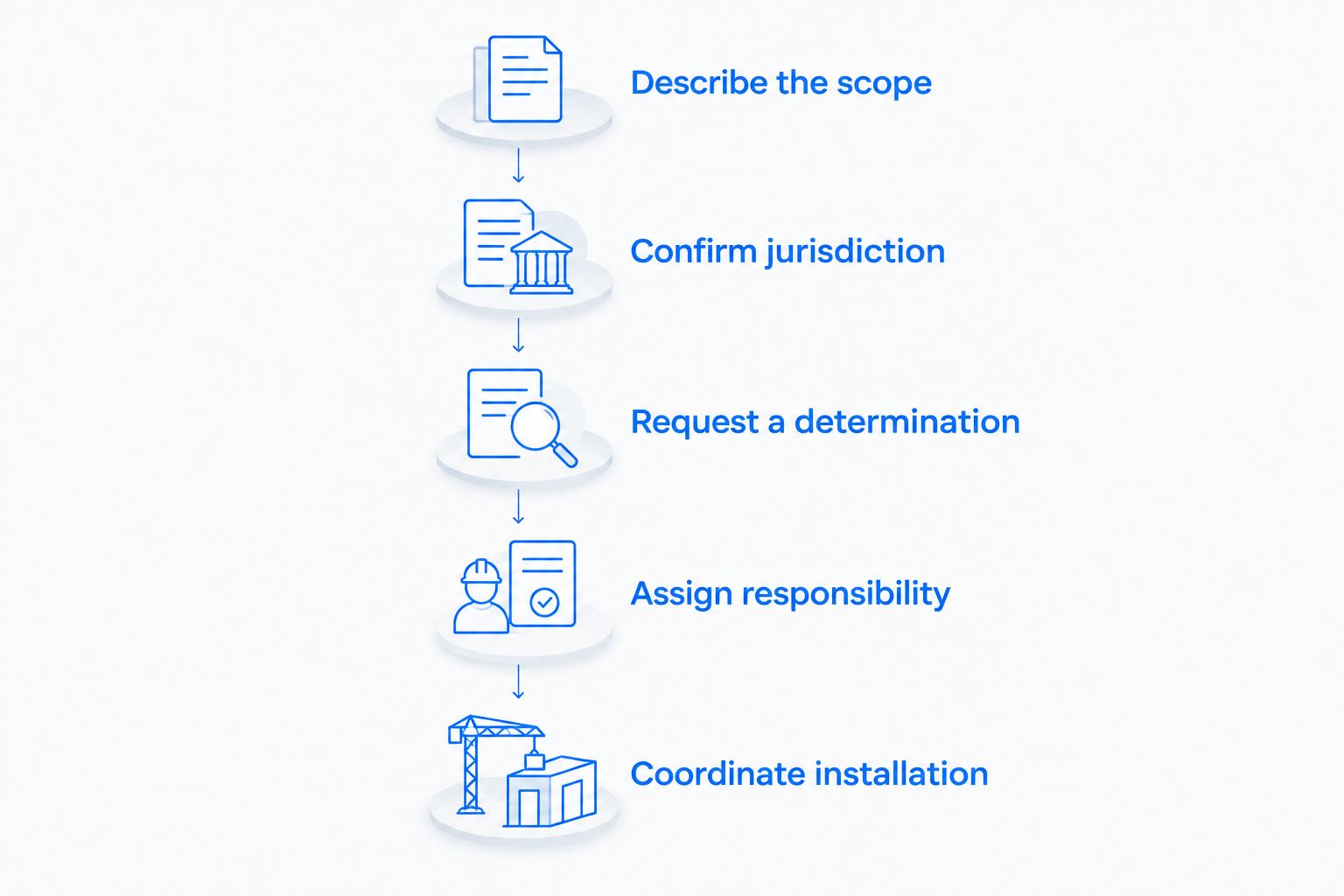
A telephone conversation helps you find the correct department, but preserve the final answer in writing. Include the project address and the scope reviewed. If the scope changes later, return to the department rather than relying on the earlier answer.
Permit responsibility belongs in writing. Read the proposal for a clear statement of whether permit handling is included, excluded, or assigned to another contractor. Ask for clarification before signing if the proposal is silent.
The agreement should also distinguish enclosure installation from repairs to the shower underneath it. Identify who handles damaged tile, unsuitable attachment surfaces, or waterproofing work discovered before installation. Do not treat these as included services unless the agreement states them.
Showerdoor is best for homeowners seeking custom shower enclosures with manufacturing and installation from one provider. That service fit does not replace a local permit determination or establish that unrelated remodeling work is included.
Ask Showerdoor to describe the enclosure work in its proposal, then compare that description with the scope you submitted to the building department. Resolve any difference before fabrication. This keeps the installation agreement and the permit inquiry aligned.
Discuss your enclosure project
Review custom framed and frameless enclosure installation for your California home.
Frameless construction alone does not establish the permit requirement. Describe the complete installation, including attachment work and any changes to the existing shower, and ask the local building department to classify it.
A framed enclosure needs the same scope-based inquiry. Neither style is a permit exemption by itself. Choose the enclosure after confirming the opening, attachment conditions, and installation requirements—not as a way to avoid approval.
No. A permit exemption is not an exemption from applicable safety requirements. Shower-enclosure glazing is subject to safety-glazing requirements; ordinary window glass is not a substitute for compliant enclosure glazing.
Ask the installer to identify the specified glass and the documentation or markings that establish compliance. The California building standards effective in 2026 and applicable federal safety-glazing requirements address compliance separately from the local permit question.
The installer can explain the work and help prepare the inquiry, but the local building department determines the permit requirement. Ask the installer for a clear scope rather than relying on a general statement that shower doors never need permits.
If the installer and department give different answers, resolve the difference before work begins. A written determination matched to the actual scope is more useful than an assumption based on a previous job.
Do I need a permit to replace only my shower glass in California?
Ask your local building department whether the exact glass-only replacement qualifies for an exemption. State explicitly whether the pan, plumbing, waterproofing, tile, and walls remain unchanged.
Does a custom-sized enclosure automatically require a permit?
Custom sizing alone does not establish whether a permit is required. The local building department reviews the installation scope and applicable requirements.
Do framed and frameless shower doors have different permit rules?
Neither framed nor frameless construction provides an automatic permit answer. Describe the attachment work and any changes to the shower when requesting a determination.
Can I use my existing bathroom remodel permit for the enclosure?
Ask the building department whether the enclosure is covered by the existing permit's approved scope. Confirm whether changed details need review and which inspections remain outstanding.
Who should handle the permit for my shower installation?
Assign permit responsibility explicitly in the installation or remodeling contract. Identify who applies, supplies documents, arranges inspections, and handles required corrections.
Does HOA approval replace a shower installation permit?
No, association approval does not replace the building department's permit determination. Confirm association requirements and local permitting separately.
What should I do if the project changes after the permit inquiry?
Submit the revised scope to the building department before proceeding with the changed work. An enclosure-only determination does not establish approval for added plumbing or shower reconstruction.
Keep the scope description, not just the answer. A note saying no permit required is less useful without the construction details that produced it. Save the submitted description, the department's response, and the final installation agreement together.
For a 2026 shower project, check those documents again before work begins. If one says glass replacement and another includes curb reconstruction, resolve the mismatch first. That small document check makes the permit question specific to the work you are actually buying.


