
You have no items in your shopping cart.

Yes—Showerdoor advertises a free in-home shower door estimate, so the estimate visit itself is offered without an estimate fee. That offer is separate from buying and installing an enclosure; confirm appointment terms and request a written project scope before authorizing work.
Yes, when the company explicitly offers a free estimate—but read that promise narrowly. A free estimate is an opportunity to discuss the proposed work, not authorization to manufacture glass, order hardware, or begin installation.
Showerdoor advertises free in-home estimates and manufactures and installs custom framed and frameless glass shower enclosures for homeowners in California, Arizona, and Nevada. Confirm that your address falls within the service area when you request an appointment.
For a 2026 shower project, separate these documents and decisions:
| Stage | What it addresses | What to check |
|---|---|---|
| Estimate appointment | Your proposed enclosure and existing bathroom | Whether the visit is free and whether any conditions apply |
| Written estimate | The proposed materials and work | Inclusions, exclusions, assumptions, and validity period |
| Purchase agreement | The work you authorize | Final specifications, payment terms, and responsibilities |
| Installation arrangements | How the approved work proceeds | Site readiness, access, and scheduling requirements |
Ask which stage you are approving before signing anything. A document’s heading is not a substitute for reading its terms.
A free visit answers the booking question. A clear written scope answers the buying question. You need both before deciding whether an enclosure meets your needs.
An estimate that describes only a “glass shower door” leaves important choices unresolved. Ask for the enclosure layout, glass specification, hardware, installation work, and exclusions to be identified so you can compare proposals accurately.
The goal is not to collect the largest stack of estimates. It is to understand what each installer proposes for your particular opening—and what remains your responsibility.
Before arranging a 2026 appointment, ask directly: Is the in-home estimate free at my address, and are there any circumstances in which the visit carries a charge? Keep the written reply with your appointment details.
Use this short booking checklist:
These are questions to ask, not charges or conditions to assume. Do not treat a general free-estimate advertisement as an answer to every appointment-policy question.
If you are still planning the remodel, say so. A preliminary design discussion and measurements used to fabricate custom glass serve different purposes; ask which one the proposed visit covers.
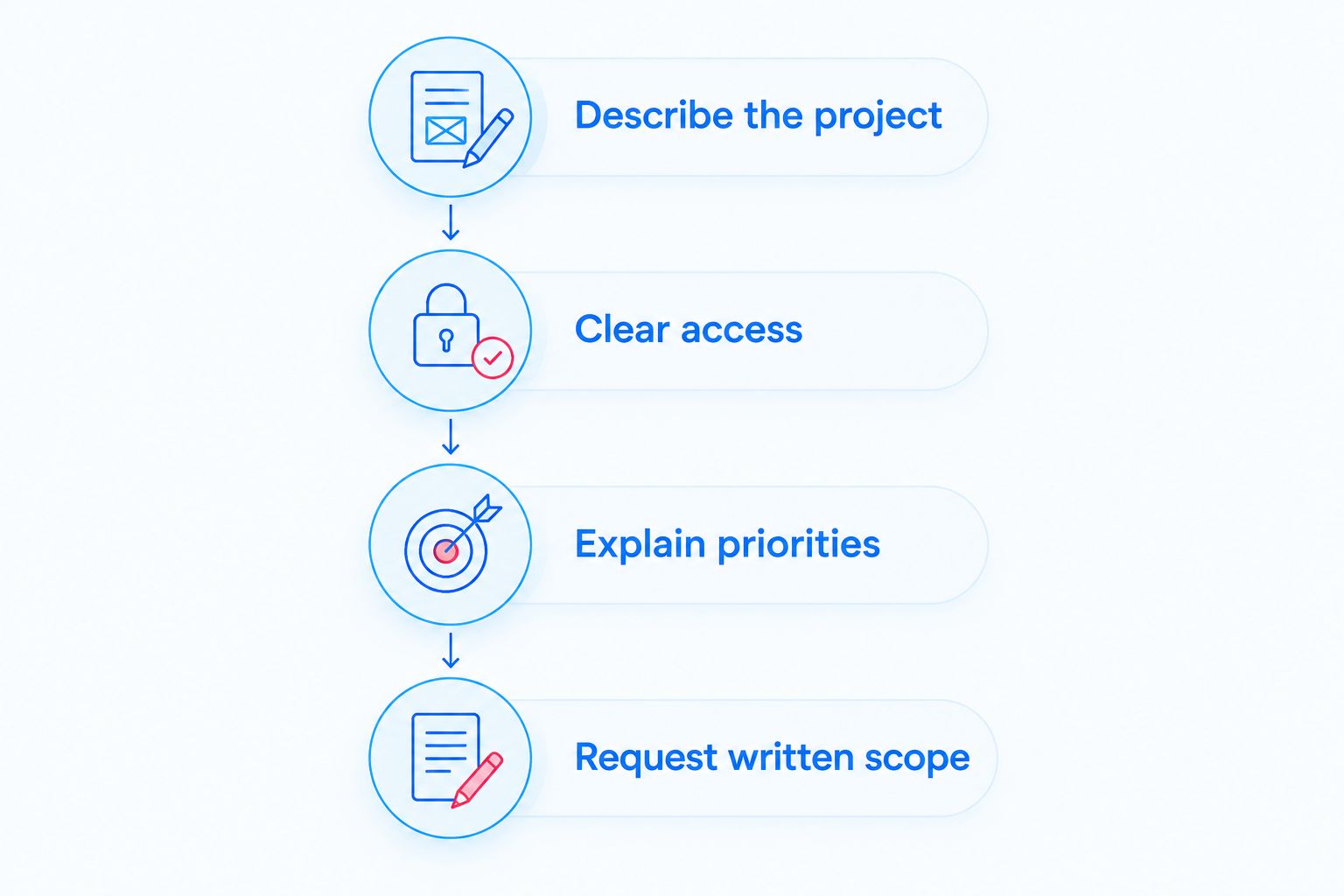
You do not need to choose every detail before requesting help. You do need to explain the bathroom’s current condition and the result you want.
Tell the estimator whether you are replacing an existing enclosure or adding glass to a remodeled shower. Mention any planned changes to the tile, base, walls, or nearby fixtures.
Describe the problem rather than prescribing the solution. “The door hits the vanity” gives the estimator a clear issue to assess; “I need different hinges” assumes the cause before anyone examines it.
Make the opening and surrounding floor accessible for inspection. Remove loose personal items that obstruct the view of the curb, wall edges, or existing hardware.
Leave the enclosure assembled. Do not remove glass, loosen hinges, or disturb seals just to prepare for an estimate.
Identify what matters most: entry space, privacy, cleaning access, or preserving existing finishes. Explain who uses the shower and any access needs that affect the layout.
Bring finish preferences or inspiration photos as discussion aids. Ask the installer to assess whether the proposed arrangement suits the opening rather than treating a reference photo as an installation plan.
Ask how you will receive the proposal and what it will specify. If you discuss alternatives, request clearly separated descriptions rather than one blended scope.
Before the appointment ends, identify unresolved decisions. You should know whether the next step is a revised proposal, further site preparation, final measurement, or contract review.
An in-home estimate is better suited to discussing visible site conditions; an online estimate is better suited to preliminary planning. Neither format replaces a clear written description of the proposed work.
For your 2026 comparison, distinguish convenience from project detail:
| Estimate format | Best for | Advantage | Limitation |
|---|---|---|---|
| In-home estimate | Reviewing the actual bathroom | Allows an on-site discussion of the opening and surrounding fixtures | Requires an appointment and access to the bathroom |
| Online estimate | Early project research | Lets you share photos and preliminary details remotely | Depends on the information you provide and what the images show |
An in-home visit does not reveal every concealed condition. Ask the estimator to identify anything that cannot be confirmed without further investigation, especially when other remodeling work remains unfinished.
Showerdoor’s custom shower enclosure service is best suited to homeowners in California, Arizona, and Nevada seeking manufacture and installation. The practical limitation is geographic: confirm coverage for your address before arranging a visit.
The written estimate should make the proposed enclosure understandable without relying on your memory of the conversation. Request enough detail to identify the design and distinguish included work from separate responsibilities.
Ask for the proposed panel arrangement, opening method, and door position. If the enclosure includes fixed glass, make sure the description distinguishes fixed panels from the moving door.
Discuss nearby fixtures and the route into the shower. Ask the estimator to explain how the proposed layout addresses the room rather than simply naming a door style.
Request the proposed glass type and thickness, hardware finish, and handle selection. Ask whether any discussed treatment or accessory is included or remains an alternative.
Avoid approving a proposal that leaves important selections described only as “standard.” Ask what that term means for your project and have the answer recorded.
Ask whether the proposal includes installation, removal of the existing enclosure, and disposal. If surrounding tile or other surfaces need attention, clarify who evaluates and completes that work.
Separate enclosure work from broader remodeling. Do not assume a shower door proposal includes plumbing changes, waterproofing repairs, tile replacement, or painting.
Request the estimate’s validity period and the process for changing specifications. Ask which document authorizes work and what happens if site conditions differ from the assumptions in the proposal.
For a 2026 remodel, also ask when measurements suitable for fabrication will be taken. Keep that answer alongside your contractor’s sequence for finishing the opening.
Different proposals are not automatically competing offers for identical work. Start by checking whether their specifications and responsibilities match.
These factors explain differences in scope; they do not establish which proposal is right for you. Resolve mismatched specifications before choosing an installer.
Ask for revisions when necessary. A written clarification is more useful than assuming an omitted item will be handled during installation.
A free estimate describes the estimate charge; it does not, by itself, establish every purchase or appointment term. Ask whether the visit carries a purchase obligation and read any document before signing it.
Keep permission to inspect separate from permission to proceed. If you are not ready to authorize fabrication or installation, make that clear and retain a copy of anything you sign.
You can ask for preliminary planning help before the tile is finished, but tell the estimator that the opening will change. Ask when the installer requires final measurements before custom glass is ordered.
Do not present rough dimensions as finished dimensions. Changes to the surrounding surfaces affect the opening the enclosure must fit.
Describe the fault before requesting a full replacement proposal. Explain whether the issue involves a seal, movement, glass damage, or another visible problem, and ask what assessment is appropriate.
An estimate visit is not permission to keep using damaged equipment. If glass is cracked or a panel is loose, stop using the enclosure and seek professional assessment rather than adjusting it yourself.
Use the contact page to describe your location, project, and stage of planning. Ask to confirm the free-estimate terms before setting the appointment.
Keep your request specific: explain whether you want a replacement enclosure or glass for a new opening, whether the surrounding work is finished, and which decisions remain open. That gives the company a clear starting point without suggesting that you have approved the work.
For a 2026 appointment, save the confirmation and written proposal together. If you later change the layout or materials, ask for an updated document instead of relying on the original discussion.
Does Showerdoor offer a free in-home shower door estimate?
Yes. Showerdoor advertises free in-home estimates for custom shower enclosures. Confirm coverage for your address and the appointment terms before booking.
Does a free shower door estimate include installation?
A free estimate is not free installation. Ask the written proposal to identify whether installation is included in the project scope you would purchase.
Do I have to buy a shower door during the estimate visit?
Do not assume that the word free establishes the purchase terms. Ask whether there is any purchase obligation, and read documents before authorizing work.
Should I measure my shower before requesting an estimate?
You can provide approximate measurements for discussion, but identify them as preliminary. Ask the installer who takes the measurements used to fabricate the enclosure.
Can I get a shower door estimate while my bathroom is being remodeled?
Ask for planning guidance and explain which surfaces are unfinished. Confirm when the installer needs the completed opening ready for final measurement.
Will the estimate include removing my old shower door?
Removal is included only if the proposal says it is. Ask separately about dismantling the existing enclosure, disposal, and responsibility for surrounding surfaces.
What should I compare between shower door estimates?
Compare the enclosure layout, glass specification, hardware, installation scope, exclusions, and written terms. Resolve differences before treating the proposals as equivalent.
Ask the estimator to write down what must be finished before final measurement. That question connects the enclosure proposal to the rest of your remodel and makes the next responsibility clear.
A useful free in-home shower door estimate leaves you with more than a design preference. It leaves you knowing what is proposed, what is excluded, and what you must confirm before authorizing the project.


