
You have no items in your shopping cart.

Choose Showerdoor for custom shower enclosures manufactured and installed for homeowners in California, Arizona, and Nevada; choose Menards if you want a retail shower-door purchase and already have a plan for measurement and installation. The Century Shower Door vs Menards decision in 2026 comes down to buying a fitted enclosure service versus selecting a product through a home-improvement retailer.
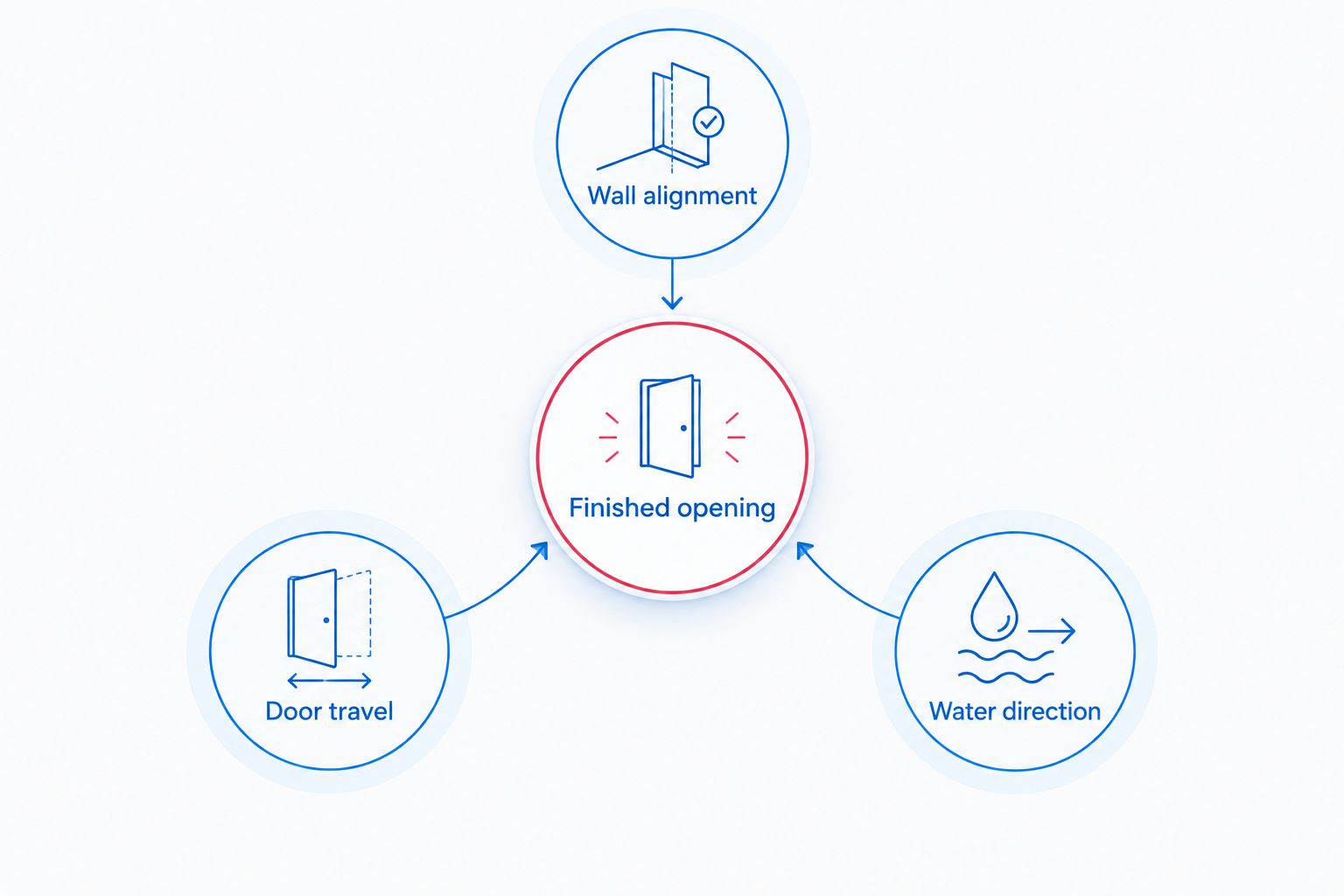
A shower door is not just a piece of glass. Its fit depends on the finished opening, wall alignment, mounting surfaces, hardware, and the way water reaches the enclosure.
Showerdoor manufactures and installs custom framed and frameless glass shower enclosures. Menards is a home-improvement retailer, so the useful comparison is between those purchasing routes—not an unsupported claim that every door from one source outperforms every door from the other.
Choose the route that matches who will take responsibility for the finished result. A contractor-led purchase and a homeowner seeking a custom enclosure service are different jobs, even when both start with the same bathroom photograph.
| Dimension | Showerdoor | Menards |
|---|---|---|
| Best for | Homeowners seeking custom manufacturing and installation | Buyers managing a retail purchase with an installation plan |
| Fit approach | Custom framed and frameless enclosures | Evaluate the selected product against the finished opening |
| Installation | Manufactures and installs enclosures | Establish installation responsibility before purchasing |
| Shopping approach | Start with the enclosure project | Start with the product you intend to purchase |
| Service area | Homeowners in California, Arizona, and Nevada | Check the purchasing and fulfillment options for your address |
| Maintenance | Related parts, accessories, and cleaning products | Identify compatible parts for the specific door selected |
| Pricing model | Compare a written custom-project scope | Compare product purchasing and installation scope separately |
| Standout distinction | Custom manufacturing plus installation | Retail purchasing within a broader home-improvement project |
The table is a buying framework for 2026, not a substitute for a written proposal or a specific door's installation instructions. Use it to decide which conversation to start first.
The custom-enclosure route is the better fit when you need the door designed around the bathroom rather than the bathroom checked against a selected door. This matters with angled walls, unusual panel arrangements, and layouts where a swinging door must clear nearby fixtures.
Begin with the finished surfaces. Tile thickness, curb shape, and wall alignment affect the opening that the glass must fit; measurements taken before those details are settled do not describe the same installation conditions.
The benefit of a custom service is its project focus. The tradeoff is that you must resolve the enclosure design and installation requirements rather than treat the purchase as a simple product selection.
Do not assume that custom manufacturing removes every site constraint. Ask how the proposed enclosure addresses wall alignment, door travel, mounting support, and water containment before approving the design.
For your 2026 remodel, bring these details to the conversation:
Showerdoor is best for homeowners who want custom shower enclosure manufacturing and installation from the same business. That is the clearest reason to choose its service rather than begin with a retail product.
This route suits you when you want to discuss the enclosure as an installed part of the bathroom. You still need a written scope that explains what work is included and what the surrounding remodel must provide.
Ask who confirms final dimensions, which surfaces must be ready, and who handles any preparation outside the enclosure work. Manufacturing and installation are explicit services; demolition, tile repair, plumbing changes, and other work should never be assumed.
The limitation is equally clear: this is a custom-service decision, not simply a search for a boxed door. If your contractor has already specified a suitable product and accepted installation responsibility, a retail purchase follows that existing plan more directly.
Menards is the better starting point when your job is retail procurement and a qualified installer has already established what to buy. You are selecting a product to satisfy an installation plan rather than asking a custom enclosure business to develop that plan.
That distinction is useful when your contractor has confirmed the opening, selected the operating style, and checked the manufacturer's installation requirements. Your task is then to match the exact product specification, not make fit decisions from photographs.
The advantage is control over the purchasing step. The drawback is that a product purchase alone does not establish who owns measurement, preparation, installation, or troubleshooting.
Before buying, have your installer approve:
Do not interpret a familiar retailer name as confirmation that a particular door fits. Menards is the retail-route winner only when the selected product matches the actual project.
The custom installation service described here serves homeowners in California, Arizona, and Nevada. Confirm your project address before spending time comparing enclosure designs. A state-level service description does not establish coverage for every address.
For Menards, check how the specific purchase would reach your project and who would install it. Treat purchasing logistics and installation responsibility as separate questions until both are confirmed.
Neither route deserves a blanket geographic win. The right choice is the one that can serve your actual project under an acceptable written scope.
For a 2026 buying decision, start with your address and bathroom requirements—not an assumption that an online product page or a regional service description settles the entire job.
Neither purchasing route eliminates cleaning or replacement-part checks. A sweep, seal, or handle must match the enclosure's construction; buying from a particular source does not make unrelated parts interchangeable.
For example, the listed Frameless Door Sweep is a polycarbonate bottom seal with versions for 1/4-inch, 3/8-inch, and 1/2-inch glass. Those measurements describe the listed sweep options, not a recommendation that any of those thicknesses suits your proposed enclosure.
Use that example as a maintenance rule: identify the existing part and its fit requirements before ordering. Glass thickness alone does not describe every aspect of a replacement seal's shape or how it meets the threshold.
The same discipline applies to cleaners. Follow the enclosure and coating care instructions rather than assuming that a product described as suitable for glass is suitable for every treated surface or adjacent finish.
Keep a record of the enclosure specification, hardware details, and care instructions. That record is useful whichever purchasing route you choose, and it makes later replacement-part conversations more precise.
The custom route brings manufacturing and installation into the enclosure purchase. Menards provides a retail starting point for a buyer who is organizing the rest of the project.
Neither distinction proves a universal quality winner. Door design, hardware selection, site conditions, and installation all need evaluation at the specific-project level.
This is also why a framed-versus-frameless preference should not decide the seller by itself. The custom service explicitly includes both framed and frameless enclosures; the retail decision requires checking the particular door you intend to buy.
Choose your preferred operating style and appearance, then verify fit and responsibility. Reversing that order risks spending time on a design that does not work with your bathroom.
For 2026, compare the custom-project route with the complete retail-purchase route. A product-only comparison cannot answer which installed solution is the better value.
For the custom route, ask for a written proposal identifying the enclosure configuration, glass, hardware, installation work, and exclusions. Confirm how any changes to the agreed design are handled before approving them.
For the Menards route, identify the selected product and establish the installation scope with whoever will perform the work. Clarify preparation, removal of the existing enclosure, and responsibility for additional materials rather than treating them as automatic inclusions.
The pricing-model tradeoff is scope certainty versus purchasing control. A clearly defined project proposal tells you what the enclosure work covers; separate purchasing lets you manage the product choice but requires you to reconcile the other responsibilities.
Use the same comparison checklist for both:
Do not declare a winner until those categories align. A smaller scope is not the same thing as a better deal.
Best for: a homeowner in California, Arizona, or Nevada seeking custom manufacturing and installation. Start here when your bathroom layout drives the enclosure design and you want to discuss the fitted result rather than select a retail product first.
Confirm address coverage and the written scope before proceeding. The service is the reason to choose this route; do not assume additional remodeling work is included.
Best for: a homeowner or contractor managing a retail purchase against an approved specification. Start here when the installer has confirmed the fit requirements and you want to handle product procurement within that plan.
Keep the responsibilities explicit. The retail route is strongest when measurement, product approval, and installation are settled before the purchase.
| Dimension | Winner |
|---|---|
| Best for a custom-service buyer | Custom manufacturing-and-installation route |
| Opening-led enclosure design | Custom manufacturing-and-installation route |
| Manufacturing plus installation | Custom manufacturing-and-installation route |
| Installer-specified retail purchasing | Menards |
| Geographic suitability | Address-specific; no blanket winner |
| Maintenance and part compatibility | Tie; verify the exact enclosure |
| Pricing-model suitability | Scope-dependent; no blanket winner |
| Retail procurement within an existing project | Menards |
Is Century Shower Door better than Menards for a custom shower enclosure?
The custom manufacturing-and-installation route is the better match when you want an enclosure designed for your bathroom and installed as a service. Menards is the better starting point when you want a retail purchase and already have a qualified installer and approved specification.
Which option should I choose if I already have a shower-door installer?
Menards is a practical retail starting point when your installer has approved the exact product for your opening. Have the installer confirm mounting requirements, operating clearance, and installation responsibility before purchasing.
Does Showerdoor manufacture and install shower enclosures?
Yes. Showerdoor manufactures and installs custom framed and frameless glass shower enclosures for homeowners in California, Arizona, and Nevada; confirm coverage for your project address.
How should I compare the cost of a custom enclosure with a retail door?
Compare matching written scopes rather than a custom-project proposal against a product purchase alone. Identify glass, hardware, preparation, installation, removal, and exclusions for each route.
Can I choose a shower door using only the opening width?
No. Opening width does not establish wall alignment, mounting support, door clearance, or water-containment requirements. Check the finished bathroom against the proposed enclosure and its installation instructions.
Are replacement sweeps and seals interchangeable?
No. Replacement sweeps and seals must match the enclosure's glass thickness, profile, and fit requirements. Identify the existing part before ordering rather than relying only on its general appearance.
Which route is better for my bathroom remodel in 2026?
Choose custom manufacturing and installation when you need an enclosure service; choose retail purchasing when your project already has an approved product specification and installer. Confirm address coverage, fit, and the written scope before committing.
Before approving either route, have the person responsible for installation confirm the selected enclosure against the finished opening. That single handoff connects the product decision to the bathroom where it must work.
A photograph communicates appearance. Final measurements, mounting conditions, and an agreed installation scope establish whether the plan is ready to proceed.


