
You have no items in your shopping cart.

Yes, shower doors can be installed without removing existing tile when the tile is secure, the shower is watertight, and the selected enclosure has suitable mounting support. Keeping the tile does not necessarily mean avoiding drilling: the installer must confirm how the hardware will attach and how any penetrations will be sealed.
Yes—preserve sound tile and assess the attachment points before ordering the door. The decision rests on the existing shower assembly, not simply whether the tile looks clean or matches your bathroom.
For a 2026 replacement project, use this sequence:
Use the custom frameless shower door measuring guide to understand what the finished opening assessment involves. Measurements alone do not establish that the wall can support the proposed hardware.
Removing serviceable tile expands the work beyond replacing a door. Leaving defective tile in place creates a different problem: a new enclosure attached to an assembly that still needs repair.
The right scope separates appearance from performance. You can keep tile you like while replacing worn enclosure hardware, but a fresh glass enclosure cannot correct a leaking shower base or movement behind the wall.
For your 2026 project, approve the attachment plan before approving the glass. That sequence keeps the design tied to the shower you actually have.
Framed and frameless describe enclosure construction, not a guarantee that either system will fit your existing mounting holes. A framed enclosure still needs suitable attachment, and a frameless enclosure still needs a defined water-management plan.
| Approach | Best for | Main advantage | Main limitation |
|---|---|---|---|
| Framed enclosure replacement | Homeowners who prefer framed glass and a compatible mounting layout | Frame components define the enclosure edges | New frame dimensions can leave old holes or marks exposed |
| Frameless enclosure replacement | Homeowners who want less visible framing and have suitable hardware support | Less framing around the glass | Hinge and bracket locations require careful support checks |
| Tile repair before installation | Showers with damaged tile or questionable attachment areas | Addresses defects before adding the enclosure | Expands the work beyond a door replacement |
Choose the enclosure that fits the existing shower safely, not the one that promises the least visible hardware. Neither framed nor frameless construction removes the need to inspect the walls and threshold.
Ask the installer to show where the new components will land. That discussion should include what the old enclosure currently conceals, especially wall channels, silicone lines, and threshold attachments.
Existing tile can stay when it provides a sound finished surface and the proposed enclosure can be attached without leaving unresolved defects. The inspection must consider the surrounding shower, not just the narrow strip where the door meets the wall.
Look for visible cracks, movement, persistent dampness, and staining outside the wet area. Report leaks even if they occur only during certain shower use; replacing the enclosure is not a diagnosis of their source.
Sound-looking grout is not proof that the waterproofing behind the tile is intact. If there are signs of leakage, establish the cause before covering the area with replacement hardware.
Tile is a finish material, not a substitute for the support required by the selected enclosure. The installer must determine whether the proposed attachment method suits the wall construction and the hardware instructions.
Existing screw holes provide information about the old installation, not approval for the new one. Their position, condition, and backing must suit the replacement system before anyone decides to reuse them.
The door must fit the finished opening and operate without striking nearby fixtures. The threshold also needs assessment for attachment, sealing, and water containment.
A custom enclosure can address the measured shape of an opening, but customization does not repair an unstable curb or a failed shower base. Resolve those conditions before finalizing the enclosure.
For a 2026 shower door replacement, these conditions determine whether keeping the tile is practical:
These factors belong in the installation discussion before you commit to a design. A photograph can show the layout, but it cannot establish hidden backing or confirm the condition of the waterproofing.
Confirm the complete mounting plan before making new holes. The installer should reconcile the hardware requirements with the wall construction, finished surfaces, and waterproofing details.
The practical order is Inspect tile, Check support, Measure opening, Plan mounting, and Seal penetrations. Each step answers a different question; none substitutes for the others.
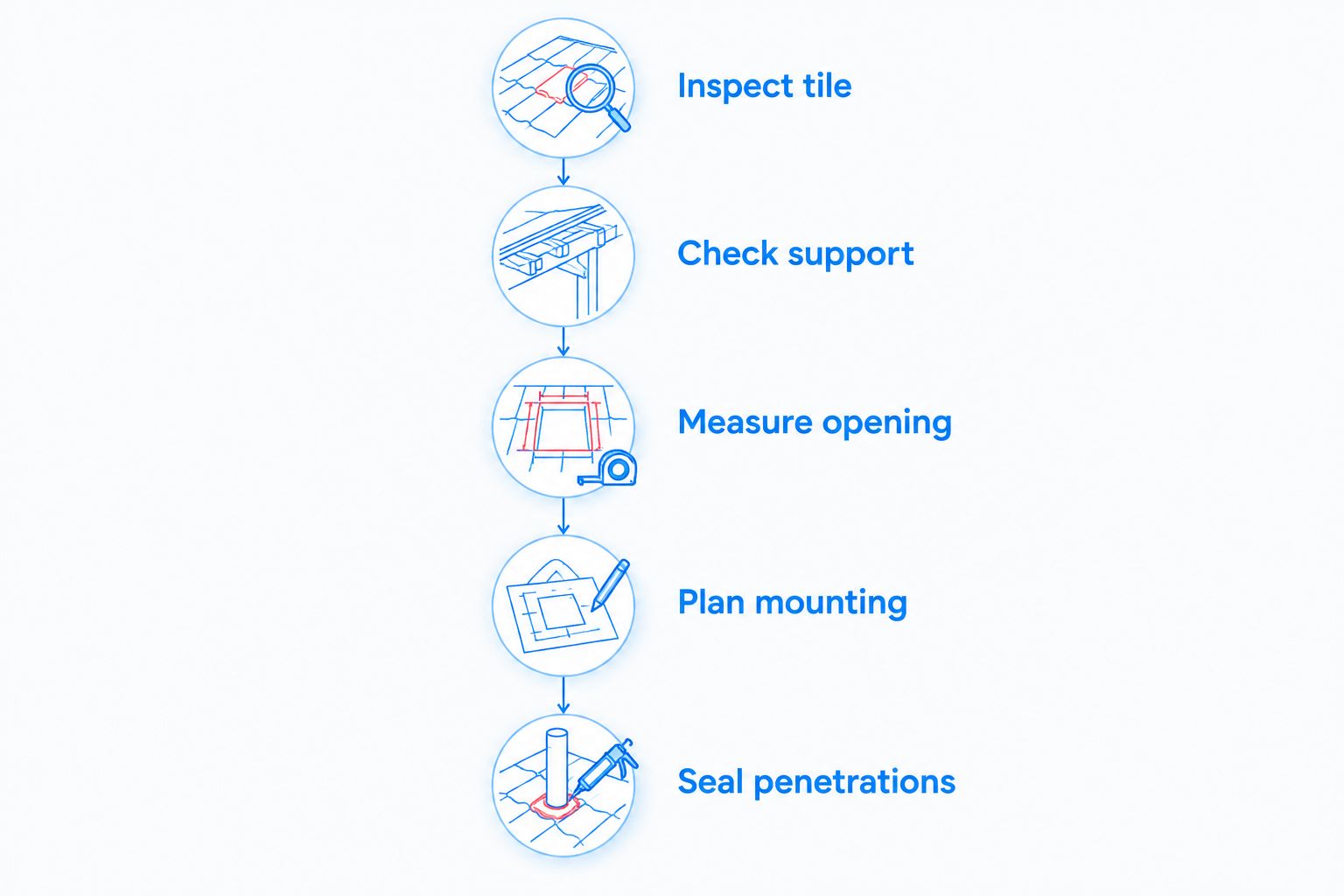
Drilling technique depends on the tile material and the selected fixing system. Let the installer identify the appropriate tools and procedure rather than treating every tiled wall as the same material.
An attachment can pass through more than the visible tile surface. The sealing detail must suit the enclosure instructions and the waterproofing assembly, especially around thresholds and curbs.
Do not assume an exterior bead of silicone resolves every penetration. Ask how the fastener location will be protected and which joints must remain open under the manufacturer's installation instructions.
Ask what happens if removing the old frame reveals cracked tile, deteriorated material, or unsupported attachment locations. Agree that those conditions will be assessed before the replacement enclosure proceeds.
That is not permission for unnecessary demolition. It is a clear boundary: retaining tile remains the goal only while the existing assembly supports a sound installation.
No—keeping the tile does not guarantee an unmarked surface after the old enclosure comes off. A different frame profile or hinge position can expose holes and discoloration that were previously hidden.
Ask the installer to distinguish between three separate tasks: removing old sealant, sealing abandoned penetrations, and restoring the tile's appearance. A watertight repair is not automatically an invisible repair.
Before final measurements for your 2026 replacement, discuss which marks the new enclosure will cover and which will remain exposed. If appearance is critical, resolve the repair approach before approving the new hardware layout.
Avoid choosing an unsuitable enclosure solely to conceal an old hole. Attachment and water containment take priority; cosmetic repairs should support that plan rather than dictate it.
Yes, if the enclosure itself remains serviceable and the problem comes from a worn or poorly fitting seal. First identify where water escapes and check door alignment, because a replacement seal does not correct every leak.
The listed Frameless Door Sweep comes in versions for 1/4-inch glass, 3/8-inch glass, and 1/2-inch glass. Those are compatibility choices for that part, not a recommendation for the thickness of a new enclosure.
Match the replacement part to the actual glass and door arrangement. Do not infer glass thickness from appearance or assume the seal on an existing door was correctly selected.
If the frame, glass, and hardware remain sound, targeted maintenance deserves assessment before a full replacement. If the door binds, the hardware moves, or the surrounding tile is damaged, investigate those conditions rather than masking them with a new sweep.
Showerdoor is best for homeowners in California, Arizona, and Nevada seeking custom shower enclosure manufacture and installation. The company supplies framed and frameless enclosures, making the existing opening and attachment conditions central to the selection discussion.
For a Showerdoor shower enclosure project, explain that retaining the existing tile is a priority. Share photographs of the entire opening, the threshold, the current attachment points, and any damage—not just the glass you want replaced.
The benefit of a custom enclosure is that its design starts with the finished opening. The limitation is equally important: a custom shower enclosure does not remove the need for tile, backing, or waterproofing repairs when the existing assembly is defective.
Before approving a 2026 installation, ask for a clear scope covering removal, mounting, abandoned holes, sealing, and conditions that require additional repair. Keep those decisions separate from your choice of handle or finish.
Can I replace my shower door without replacing the tile?
Yes, you can replace a shower door without replacing sound existing tile when the new enclosure has suitable mounting support. Check the tile, waterproofing condition, finished opening, and attachment locations before ordering.
Does installing a shower door without removing tile mean no drilling?
No, retaining the tile does not mean the installation will avoid drilling. The selected enclosure and its installation instructions determine the attachment method.
Can the installer reuse the old shower door screw holes?
Old screw holes can be reused only when their locations, condition, and underlying support suit the replacement hardware. Matching hole positions alone is not enough to establish a sound attachment.
Is a frameless shower door better for keeping my existing tile?
A frameless shower door is not automatically better for retaining existing tile. Choose between framed and frameless construction after checking support, opening geometry, old attachment marks, and the required hardware layout.
Will a new shower door fix water leaking behind the tile?
A new shower door does not repair failed waterproofing behind the tile. Identify the leak source before replacing the enclosure so the installation does not leave the underlying defect unresolved.
Can Showerdoor help with a custom enclosure for an existing tiled shower?
Showerdoor manufactures and installs custom framed and frameless shower enclosures for homeowners in California, Arizona, and Nevada. Whether the existing tile can remain depends on the opening, surface condition, mounting support, and waterproofing assessment.
The most useful replacement photo is often the mounting area, not the full bathroom. Before the old enclosure comes off, photograph where each channel, hinge, and bracket meets the tile, then document those areas again after removal.
Those images help you discuss newly exposed holes and damage against the original condition. Keep the tile-preservation goal explicit, but do not let it override a repair the shower needs.


