
You have no items in your shopping cart.

Sliding shower doors do not inherently leak more than swinging doors; water containment depends on panel overlap, seals, alignment, drainage, and where the shower spray lands. Neither style is a watertight barrier, so replacing a sliding door with a swinging door does not automatically fix water escaping onto your bathroom floor.
A wet floor does not identify the failed part. Water escaping while the shower runs needs a different investigation from water dripping off a door after you open it. Treating both as the same problem leads to unnecessary replacement or misplaced caulk.
For a 2026 bathroom remodel, choose the door around the finished opening and water path—not a blanket claim that one operating style never leaks. If water appears beneath the glass, start with the guide to stopping a shower door from leaking at the bottom.
Door movement alone does not determine leak resistance. Sliding doors manage water through overlapping panels, edge details, and the drainage arrangement of the particular enclosure. Swinging doors rely on their perimeter clearances, seals, bottom sweep, and threshold details.
Use this comparison when discussing a 2026 installation. It identifies practical differences, not a measured leak-rate ranking.
| Door style | Best for | How it manages water | What needs attention | Main limitation |
|---|---|---|---|---|
| Sliding shower door | Bathrooms where an outward door swing would conflict with fixtures or circulation | Overlapping panels and the system's seals, guides, and drainage details | Panel position, overlap, wall connections, and drainage openings | Overlap areas and lower guides need cleaning and inspection |
| Swinging shower door | Openings with enough clearance for the specified swing | Edge seals, bottom sweep, and threshold geometry | Hinge alignment, closing position, seal contact, and bottom clearance | A wet door can drip outside when opened outward |
A framed enclosure and a frameless enclosure also handle their edges differently. Do not assume every slider has the same bottom track, or every swinging door uses the same sweep. Compare the actual enclosure details, not just the words sliding and swinging.
A sliding enclosure needs the panels to close in the positions intended by its design. On a bypass system, the overlap helps interrupt the path between the shower spray and the bathroom. Incorrect positioning or inadequate overlap leaves a more direct route for water.
Check the enclosure's instructions before changing which panel sits nearest the showerhead. Panel arrangement varies, and a general rule taken from a different system is not a substitute for the correct installation detail.
Lower tracks and guides also differ. Where the system has drainage openings, those openings must remain clear so collected water returns to the shower. Do not caulk an opening simply because it looks like a gap. Blocking an intended drainage path can trap water rather than contain it.
Sliding doors are a practical choice when you need to avoid a projecting door. The trade-off is access for cleaning: overlapping glass and lower channels require attention that an unobstructed panel does not.
A swinging door must close into its intended position without dragging, striking adjacent glass, or leaving an unintended opening. A displaced seal or worn bottom sweep can let water escape even when the glass looks correctly installed.
Watch what happens before opening the door. If the bathroom floor stays dry while the shower runs but gets wet when the door swings outward, the immediate issue is water carried on the door—not necessarily leakage through the closed enclosure.
Swinging doors provide direct access without overlapping moving panels. Their limitation is clearance: the swing must work with nearby fixtures and the room's circulation. Changing styles to solve a leak is a poor trade if the replacement creates an obstruction.
A sweep is not a correction for every bottom leak. It cannot change an incorrectly sloped curb or repair a failed connection beneath the enclosure.
These factors explain why two doors with the same operating style can behave differently:
The distinction matters: seals and tracks belong to the enclosure, while curb slope and underlying waterproofing belong to the shower construction. A door repair should address the part that is actually allowing water out.
For a 2026 repair, record the first place water appears before buying parts. A puddle spreads across the floor and can disguise its starting point. Keep the observation controlled, and stop using the shower if water reaches nearby walls or flooring.
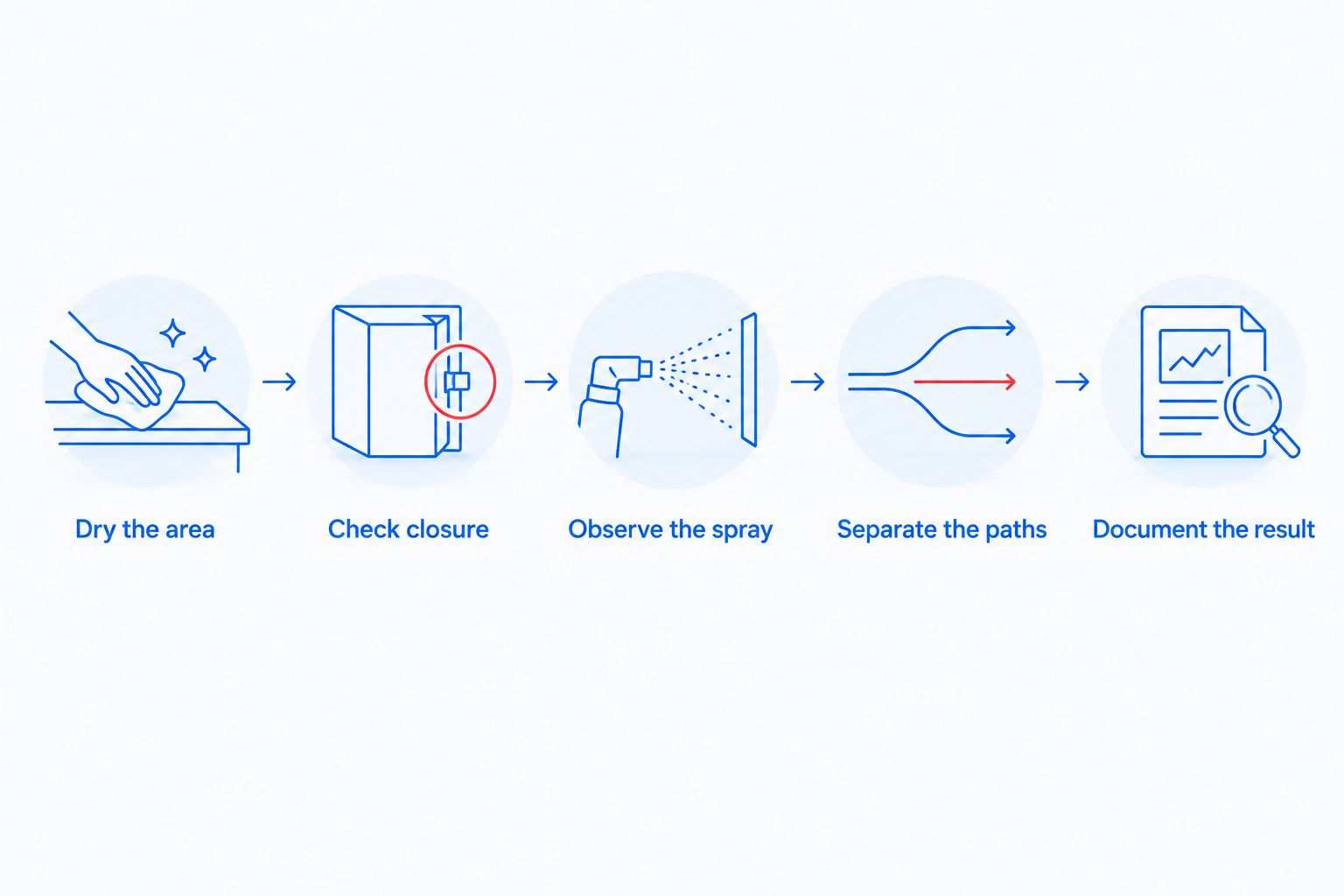
Do not loosen hinges, rollers, or glass clamps as part of this observation. Heavy glass and loaded hardware require the correct handling procedure. If a panel is loose, damaged, or contacting another hard surface, stop operating it and arrange service.
Repair the identified defect, not the entire category of door. Clearing an intended drainage opening is a different job from replacing a torn sweep. Neither task resolves water entering through a failed shower base.
Start with accessible cleaning and a visual check against the enclosure's care instructions. Avoid pushing tools into hidden drainage channels or removing hardware to reach debris. When the water path remains unclear, ask an installer to inspect it rather than sealing every visible opening.
For bottom-seal replacement, identify the glass thickness and seal profile before ordering. The listed Frameless Door Sweep is a polycarbonate bottom seal with versions for 1/4-inch, 3/8-inch, and 1/2-inch glass. Those dimensions describe glass compatibility; they are not leak-resistance ratings or evidence that the sweep fits every enclosure.
Compare the old part's mounting shape and water-deflecting profile with the replacement instructions. A matching glass thickness alone does not establish a complete fit. Do not force a seal onto the glass or add adhesive unless the specified installation calls for it.
Replacement becomes a separate discussion when the enclosure cannot fit or operate correctly, or when correcting the opening requires a different design. Ask the installer to explain why a targeted repair will not address the documented water path.
Choose a sliding door when avoiding a projecting swing is the main layout requirement. Choose a swinging door when the opening and surrounding clearance support its operation. Neither choice earns a leak-proof promise.
During a 2026 site discussion, ask the installer to show where water returns to the shower, which joints receive sealant, and which seals are replaceable. Review the showerhead position at the same time. These details connect the enclosure choice to the way you will actually use the shower.
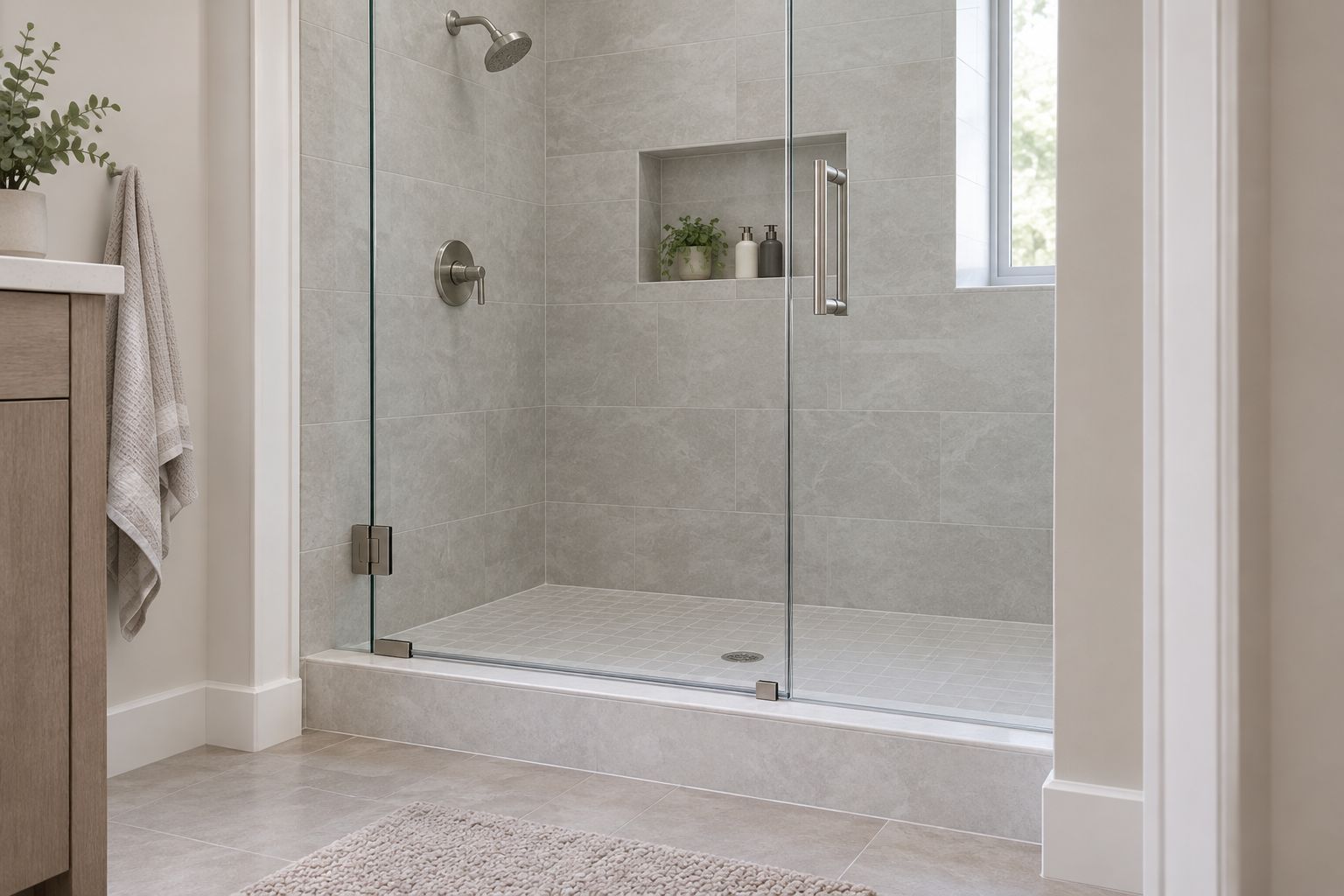
Showerdoor manufactures and installs custom framed and frameless glass shower enclosures for homeowners in California, Arizona, and Nevada. Showerdoor is best for homeowners in those states seeking a custom shower enclosure with installation. Its service area is a limitation for readers elsewhere, and a custom enclosure does not replace sound shower-base construction.
Before approving a design, ask who will address an unsuitable curb or wall condition. Keep that responsibility explicit rather than assuming the glass installation includes corrections to the surrounding shower.
A frameless door is not automatically the source of a leak; inspect its clearances, seals, spray exposure, and installation joints. Framed construction adds channels and edge details, but those details still need correct installation and clear drainage.
Sliding versus swinging describes movement. Framed versus frameless describes construction. Keep those decisions separate when comparing proposals so a change in appearance does not get mistaken for a guaranteed containment improvement.
More silicone is not a reliable fix until you identify the water path. Sealant belongs only where the enclosure's installation instructions specify it; drainage openings must remain open.
Do not seal a moving joint shut or cover a worn sweep with caulk. If an existing installation joint has failed, have the joint assessed and prepared correctly rather than applying another layer over contaminated material.
Do sliding shower doors leak more than swinging doors?
Sliding shower doors do not inherently leak more than swinging doors. Compare overlap, seals, alignment, drainage, threshold geometry, and spray direction rather than door movement alone.
Why does my sliding shower door leak at the bottom?
A bottom leak needs inspection of the lower seal, drainage openings, panel position, and threshold. Identify where water first appears before replacing parts or adding caulk.
Is a swinging shower door completely waterproof?
A swinging shower door is not a completely watertight barrier. Its moving edges and bottom clearance need the correct seals and installation details, and an outward-opening wet door can drip onto the floor.
Can I caulk the drainage holes in my shower-door track?
Do not caulk intended drainage openings in a shower-door track. They allow collected water to return to the shower; confirm their location in the enclosure's instructions.
What glass thickness does the listed Frameless Door Sweep fit?
The listed Frameless Door Sweep has versions for 1/4-inch, 3/8-inch, and 1/2-inch glass. Match the seal profile and enclosure requirements as well as the glass thickness.
Should I replace my sliding door if it leaks?
Do not replace a sliding door solely because water escapes. First identify whether the defect involves a serviceable seal, obstructed drainage, alignment, or the surrounding shower construction.
Does Showerdoor install custom shower enclosures in my state?
Showerdoor manufactures and installs custom shower enclosures for homeowners in California, Arizona, and Nevada. Confirm the details for your property before planning installation.
For your 2026 inspection, watch the floor before anyone opens the door. A dry floor during showering followed by drips during opening points to a different water path than an active leak through the closed enclosure. That simple observation gives the installer a clearer starting point than a photograph of the final puddle.


