
You have no items in your shopping cart.

California requires safety glazing for glass shower doors in 2026; tempered safety glass is the standard choice, but the requirement is not limited to tempered glass when another approved glazing assembly meets the applicable standards. Ordinary annealed glass is not an acceptable substitute. Specify documented shower-door safety glazing, not simply glass described as thick or strong.
Safety glazing is required; tempering is the usual way shower-door glass meets that requirement. California's building and residential codes identify glazing in shower doors and enclosures as a hazardous application. The safety requirement addresses injury from human impact, not just whether the panel supports its own weight.
For a California project in 2026, check the code applicable to your permit and the local building department's requirements. Federal safety-glazing requirements also apply to shower doors and enclosures under the Consumer Product Safety Commission's regulation, 16 CFR Part 1201.
Do not confuse glass thickness with safety certification. The guide to shower-door glass thickness options explains a separate selection decision: matching the panel to its enclosure and hardware.
| Glass option | Best for | Advantage | Limitation |
|---|---|---|---|
| Tempered safety glass | Conventional shower doors with compatible hardware | Meets safety-glazing requirements when properly tested and identified | Cannot be cut or drilled after tempering; can still break |
| Approved laminated safety-glazing assembly | Projects specifically designed and approved for laminated glazing | An interlayer helps retain fragments after breakage | Requires confirmation of shower-use compliance and assembly compatibility |
| Ordinary annealed glass | Applications outside required safety-glazing locations | Can be cut before installation | Not acceptable as ordinary, non-safety glass in a shower door |
The decision is not which material sounds stronger. It is whether the specific glass and enclosure assembly satisfy the required safety standard and installation conditions.
A shower door sits beside wet, hard surfaces where a slip can turn into direct contact with the glass. Ordinary glass can break into large, sharp pieces. Tempered glass breaks differently, but that does not make a broken tempered panel harmless.
For your 2026 remodel, resolve the glazing specification before ordering. Once a panel is tempered, a misplaced hinge hole or incorrect dimension cannot be corrected by trimming the finished glass.
A code-compliant panel also needs a suitable installation. Incorrect hardware, damaged edges, or glass-to-metal contact can create problems that a safety stamp does not prevent.
Federal regulation 16 CFR Part 1201 covers architectural glazing products, including shower doors and enclosures. Shower glazing falls under Category II impact requirements, which include a 400 foot-pound impact test.
That figure describes a standardized test. It is not a guarantee that an installed door will survive every collision, edge impact, or installation error.
Ask for documentation connecting the actual glass to the required standard. A general statement that a supplier sells safety glass does not identify the panel being installed in your bathroom.
For a 2026 California project, your specification should distinguish these separate questions:
A reference to a glass standard is useful only when it establishes the required performance. Do not accept an unrelated test designation as proof of shower-door compliance.
Best for: homeowners ordering a conventional framed or frameless shower enclosure with matching hardware. Tempered glass is heat-treated to change its strength and breakage behavior. When it breaks, it generally fragments into small pieces rather than the large shards associated with ordinary annealed glass.
Its practical limitation is finality. The manufacturer must complete cutting, drilling, and edge preparation before tempering. You cannot move a handle hole later by drilling the installed panel.
Tempering also does not remove the need for careful handling. Exposed edges deserve particular attention during transport and installation because edge damage can contribute to failure.
Before approving tempered glass, confirm:
Choose tempered safety glass as a complete enclosure specification, not as an isolated material purchase.
Best for: a project whose designer, glazing supplier, and local building department accept a specific laminated assembly. Laminated glass uses an interlayer between glass layers. That interlayer helps retain broken fragments, which is different from the breakage behavior of a single tempered panel.
The limitation is that the word laminated does not establish suitability for a shower. The assembly still needs the required impact performance, appropriate edge detailing, and compatible support and hardware.
Do not assume a laminated panel can replace tempered glass in an existing frameless door. Hinges and clamps are designed around particular glass specifications, and the proposed substitution needs explicit confirmation.
Use laminated glazing only as an approved, documented assembly—not as an assumed equivalent. If the supplier cannot establish shower-use compliance and hardware compatibility, do not authorize the substitution.
The baseline safety requirement remains. What changes is the specification needed to satisfy the design and approval conditions of your bathroom.
These factors do not create an exemption for ordinary shower-door glass. They explain why a compliant replacement requires more than copying the old panel's width and height.
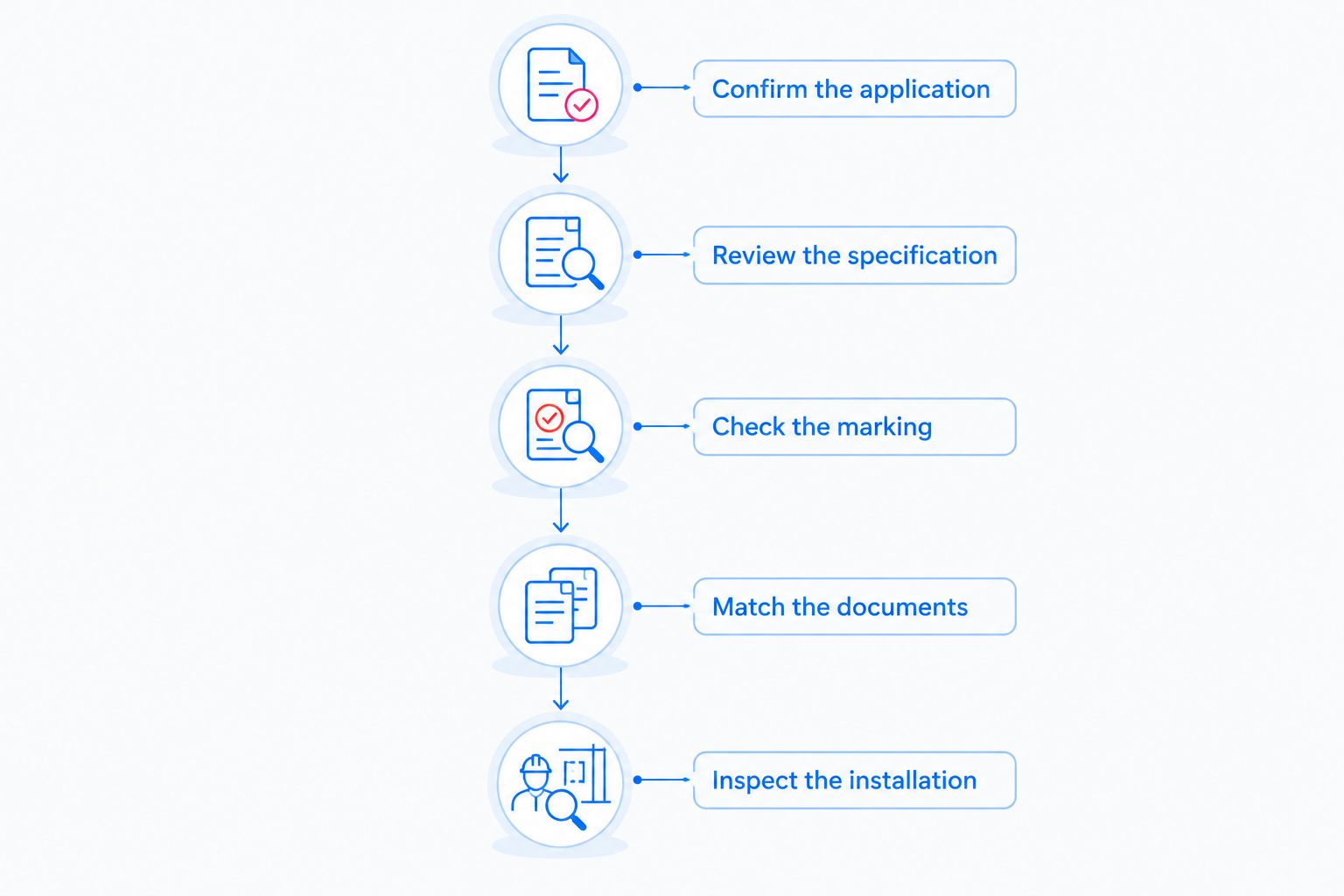
Use this sequence before you accept delivery or authorize installation. For a 2026 replacement, keep the approved specification with your project records so the installed panel can be checked against what you ordered.
An unclear marking is a reason to ask questions, not permission to assume compliance. If you cannot establish what the panel is, pause the installation until the supplier resolves its identity.
A framed shower door still needs safety glazing. The frame supports and surrounds the panel; it does not change the hazardous nature of the shower-door application.
Do not accept ordinary glass because a replacement panel fits inside an existing frame. The replacement must satisfy the glazing requirement as well as the frame's dimensional and installation requirements.
For an older enclosure, have the installer evaluate the frame and hardware before ordering glass. Reusing parts is a separate decision from choosing compliant glazing.
No. A 3/8-inch panel is not automatically safety glazing, and neither is a 1/2-inch panel. Thickness describes a dimension. It does not prove tempering, impact certification, or suitability for a specific enclosure.
Those thicknesses are used in frameless shower construction, but they are not universal minimums for every shower door. Framed systems and different hardware designs use their own specifications.
Choose thickness with the enclosure manufacturer or installer. A heavier panel also changes the demands on the supporting hardware; thicker is not a substitute for a correctly designed assembly.
Yes, replacing only the glass is possible when the existing assembly can accept a properly specified replacement. The installer needs to verify the frame or hardware, panel geometry, cutouts, and clearances before fabrication.
Do not use the broken panel's apparent thickness as the entire order specification. The replacement needs its own safety-glazing compliance, even when the original door has been in place for years.
A panel with cracks or damaged edges needs professional assessment. Do not keep operating a damaged door while trying to confirm its marking or compare replacement options.
Showerdoor is best for homeowners in California, Arizona, and Nevada who want custom shower enclosure manufacturing and installation together. The company manufactures and installs framed and frameless glass enclosures, making its custom shower enclosure service relevant when panel fabrication and installation need to be coordinated.
The boundary is equally clear: a manufacturer's service does not replace local code approval. Ask for the proposed glass specification, safety identification, and hardware details rather than treating a brand name as proof that every possible configuration is approved.
For your project, describe the opening and intended door operation first. Then have the enclosure specified around the actual site conditions.
Plan your custom shower enclosure
Review custom framed and frameless enclosure services for California, Arizona, and Nevada homeowners.
Is tempered glass required for shower doors in California?
California requires safety glazing for glass shower doors; tempered safety glass is the standard choice. Another glazing assembly needs documented compliance with the applicable standards and acceptance for the proposed installation.
Can I use regular glass if my shower door has a frame?
No. Ordinary annealed glass is not an acceptable shower-door substitute merely because a metal frame surrounds it. The glass must meet the applicable safety-glazing requirements.
How can I tell whether my shower door is tempered?
Look for a permanent safety-glazing marking, usually near a corner, and check the supplier's documentation. If the marking is missing or unclear, have a qualified glazing professional establish the panel's identity rather than guessing from its appearance.
Is laminated glass better than tempered glass for a shower?
Laminated glass is not automatically better for a shower. Its fragment-retaining interlayer offers a different breakage behavior, but the specific assembly still needs shower-use compliance, compatible hardware, and local acceptance.
Does frameless shower glass have to be 1/2 inch thick?
No. A 1/2-inch thickness is not a universal requirement for frameless shower doors. The enclosure design, panel dimensions, and hardware determine the appropriate specification.
Can a glass shop cut a tempered shower door to fit?
No. A tempered shower-door panel cannot be cut or drilled after tempering. Changes to dimensions or hardware holes require a newly fabricated panel.
Does Showerdoor install custom shower enclosures in California?
Yes. Showerdoor manufactures and installs custom framed and frameless glass shower enclosures for homeowners in California, Arizona, and Nevada. Confirm the proposed glazing and installation specification for your particular project.
A tiny corner marking can tell you more about compliance than a heavy panel can. Before accepting your 2026 installation, locate the safety mark with the installer and retain the supporting order documents.
Take a readable photograph before hardware or viewing angles make identification inconvenient. That record helps a future installer identify what was supplied without relying on memory or appearance.


