
You have no items in your shopping cart.

Shower door glass in 2026 comes in four standard thicknesses: 1/4 inch (6mm), 5/16 inch (8mm), 3/8 inch (10mm), and 1/2 inch (12mm), and picking the wrong one shows up fast as a door that flexes, chatters against the header, or needs oversized hardware it was never designed for. Best overall: 3/8 inch (10mm) tempered glass for frameless swing and sliding doors. Best for framed or budget conversions: 1/4 inch (6mm). Best for large single-panel frameless enclosures: 1/2 inch (12mm). Everything below explains why, and where 5/16 inch (8mm) still earns a spot.
Glass thickness isn't a spec you revisit after installation. Once a frameless panel is drilled, hinged, and sealed against the wall, the thickness is set for the life of the enclosure, usually decades in a bathroom that sees daily moisture and slamming.
Too thin for the panel width and the door flexes when it closes, rattles hinges loose over time, and can develop stress cracks near clip points. Too thick for a framed track and you're paying for weight the frame was never designed to carry. Century Shower Door sizes glass thickness to the panel and hardware together, not as a separate decision, which is the detail most online glass calculators skip.
The framed-versus-frameless choice also drives most of the thickness decision before you ever pick a number. If you haven't settled that question yet, framed vs frameless pricing is the place to start, since it determines whether 1/4 inch is even on the table.
| Thickness | Best for | Standout feature | Key limitation |
|---|---|---|---|
| 1/4 in (6mm) | Framed doors, tub-to-shower conversions | Lightest option, easiest on standard framed tracks | Flexes on wider frameless panels |
| 5/16 in (8mm) | Mid-size sliding shower doors | Less flex than 1/4 inch without frameless weight | Less common, fewer hardware options |
| 3/8 in (10mm) | Frameless swing and sliding doors | Standard frameless thickness with full hardware support | Heavier than needed for narrow framed doors |
| 1/2 in (12mm) | Large single-panel frameless enclosures | Maximum rigidity for wide unsupported spans | Requires heavy-duty hinges and a reinforced header |
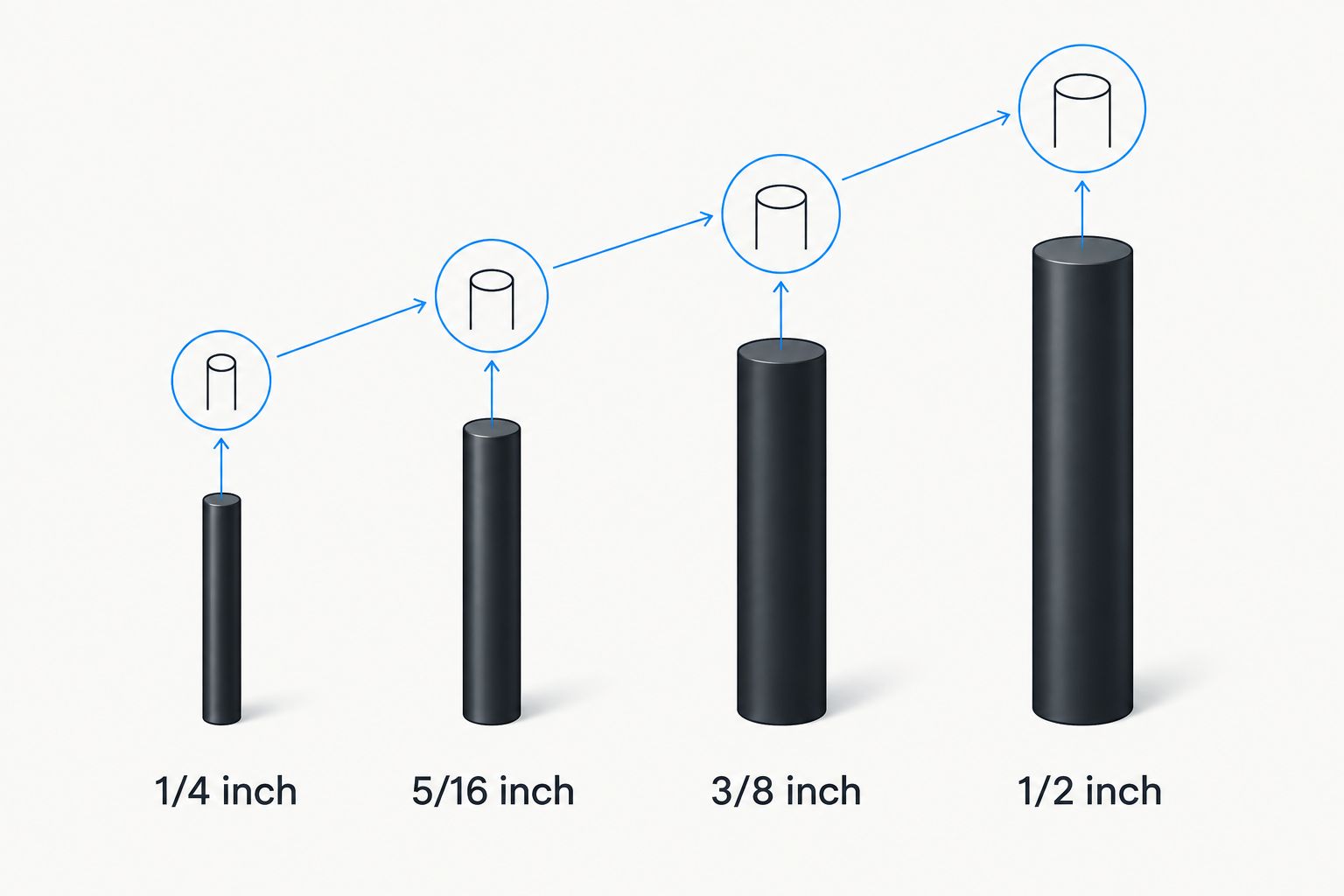
1/4 inch glass is the lightest tempered option on the market and the standard fill for framed shower doors, where the metal frame carries most of the structural load instead of the glass itself. It's also the common choice for tub-to-shower conversions where the existing opening dictates a lighter, easier-to-handle panel.
1/4 inch (6mm) pros:
1/4 inch (6mm) cons:
Best for: framed shower doors and tub-to-shower conversions on a tighter budget.
Verdict: Buy if you're installing a framed door or converting a tub opening. Skip it for a wide frameless panel.
5/16 inch sits between the framed standard and the frameless standard. It shows up most often on sliding shower doors where the panel is wider than a typical framed door but the enclosure still uses some framing for support.
5/16 inch (8mm) pros:
5/16 inch (8mm) cons:
Best for: mid-size sliding shower doors that need less flex than 1/4 inch without going fully frameless.
Verdict: Hold as a solid middle option, but confirm hardware availability before committing.
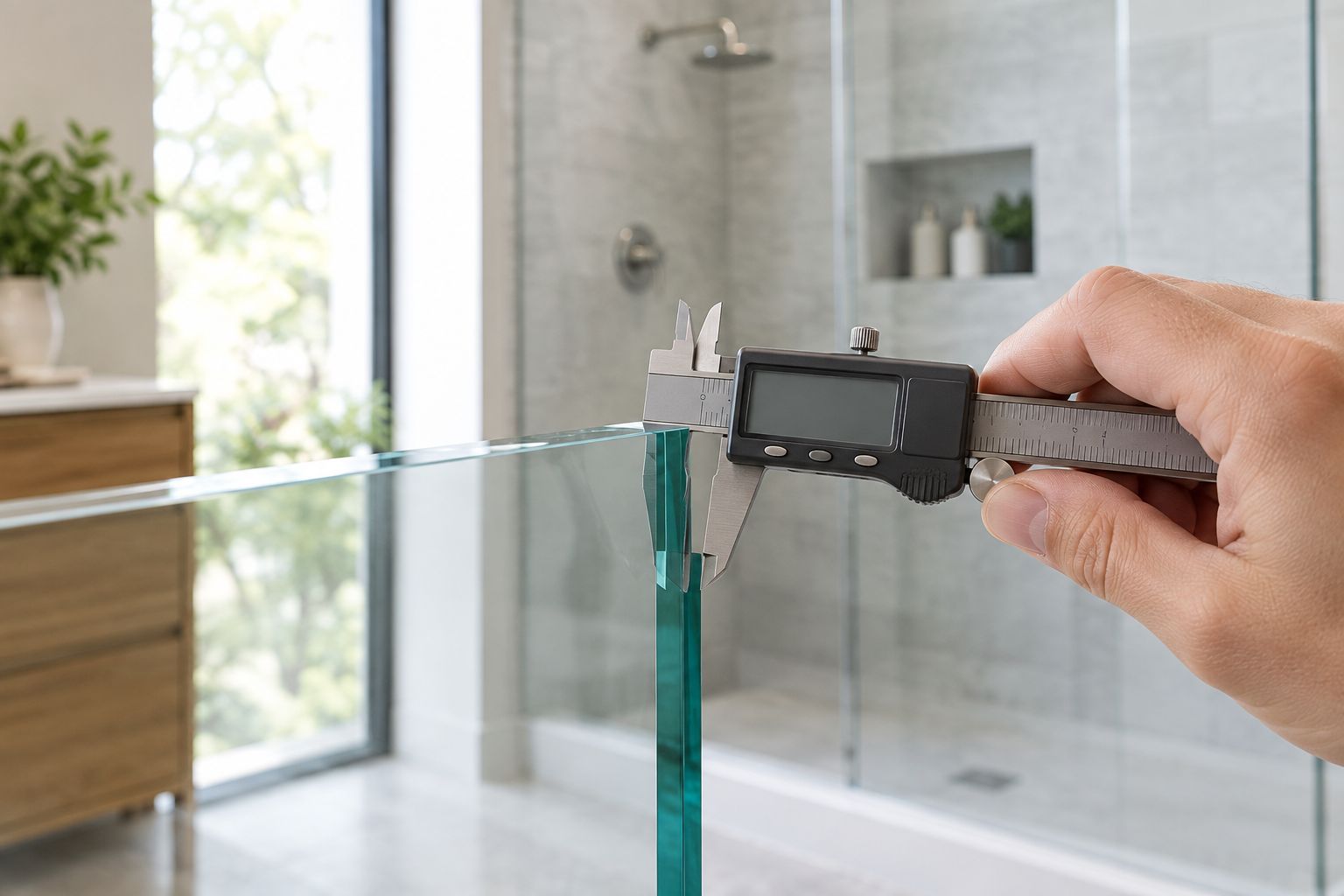
3/8 inch is the industry default for frameless shower doors in 2026, and for good reason: it's thick enough to stay rigid on swing and sliding panels up to standard widths, and it's the thickness most hinges, clips, and seals are engineered around. This is the thickness Century Shower Door installs most often on frameless jobs across California, Arizona, and Nevada.
Hardware compatibility matters here as much as the glass itself. A frameless door sweep is cut for 1/4, 3/8, and 1/2 inch glass specifically, which tells you how tightly seals and sweeps are matched to thickness rather than sold as one-size-fits-all.
3/8 inch (10mm) pros:
3/8 inch (10mm) cons:
Best for: frameless swing and sliding shower doors at standard widths.
Verdict: Buy. This is the default frameless thickness for most bathrooms in 2026.
1/2 inch is the heaviest standard shower glass thickness, reserved for wide single-panel frameless enclosures where the glass itself has to span further without a center support or second hinge point. It's the thickness that shows up on statement walk-in showers with one continuous panel rather than a split door and fixed panel.
1/2 inch (12mm) pros:
1/2 inch (12mm) cons:
Best for: large single-panel frameless enclosures over standard door widths.
Verdict: Buy for a wide statement panel. Wait and confirm your header can carry the load before ordering.
Each thickness was scored against the six criteria above: panel span, hardware fit, hinge rating, feel on close, seal compatibility, and tempering. 3/8 inch (10mm) wins on the combination of hardware availability and rigidity across the widest range of panel sizes, which is why it's the default answer to "best shower door glass thickness" for most 2026 installs. 1/4 inch and 1/2 inch win their categories by being the correct tool for a narrower use case, not by beating 3/8 inch on every metric.
If you're not sure which panel width or door style you're working with yet, default to 3/8 inch (10mm) frameless glass — it's the thickness with the deepest hardware support and the fewest install surprises in 2026. Drop to 1/4 inch only if you're keeping a framed track or converting a tub opening on a budget. Step up to 1/2 inch only when you already know the panel is a wide single sheet with no center support.
What is the best shower door glass thickness for a frameless enclosure?
3/8 inch (10mm) tempered glass is the standard for frameless shower doors in 2026. It's rigid enough for full-height swing and sliding panels and matches the widest range of available hinges and seals.
Is 1/4 inch glass strong enough for a shower door?
Yes, for framed doors and tub-to-shower conversions where the metal frame carries the structural load. 1/4 inch glass flexes noticeably if used on a wide frameless panel without a frame to support it.
When do you need 1/2 inch shower door glass?
1/2 inch (12mm) glass is used on large single-panel frameless enclosures with no center support, where the extra rigidity replaces a second hinge point. It requires heavy-duty hinges and often a reinforced header.
Does thicker shower door glass cost more?
Thicker glass costs more per panel and requires heavier hardware, so cost climbs from 1/4 inch through 1/2 inch. The difference reflects both the glass and the hinges rated to carry it.
Is 5/16 inch glass common for shower doors?
5/16 inch (8mm) is less common than 1/4 inch or 3/8 inch but is used on mid-size sliding doors that need less flex than 1/4 inch without going to full frameless thickness.
Does glass thickness affect how a shower door seals?
Yes. Door sweeps and seals are cut for specific thicknesses, most commonly 1/4, 3/8, and 1/2 inch, so the seal has to match the glass thickness exactly to close a gap properly.
Can you mix glass thicknesses in one shower enclosure?
It's uncommon. Matching hinges, clips, and seals are sized to one thickness, so most enclosures use a single thickness across the fixed panel and the door.
The thickness decision usually gets made on paper before anyone measures the actual header or wall the door hangs from. Confirm the header and wall anchor point can carry the hinge load for your chosen thickness before ordering glass, especially at 1/2 inch, where the wrong wall anchor is a more common failure point in 2026 installs than the glass itself.


