
You have no items in your shopping cart.

Best overall: custom frameless glass enclosure. Best for period bathrooms: custom framed glass. Best budget option: a circular shower curtain rod. Converting a clawfoot tub into a working shower in 2026 means containing water without erasing the freestanding silhouette that made you keep the tub.
A clawfoot tub sits off the wall. Standard sliding tub doors and most kit enclosures assume three walls and a straight apron. Force a stock door onto a freestanding rim and you get leaks, stress cracks, and hardware that never seats. In 2026 homeowners keep clawfoots for style, then discover they still need a real shower. The right door or enclosure solves water control, cleaning access, and the visual weight of glass against an antique tub. Wrong fit wastes the renovation budget twice — once on the door, again on the fix. Century Shower Door manufactures and installs custom framed and frameless glass shower enclosures for homeowners in California, Arizona, and Nevada, which is the lane this conversion actually lives in.
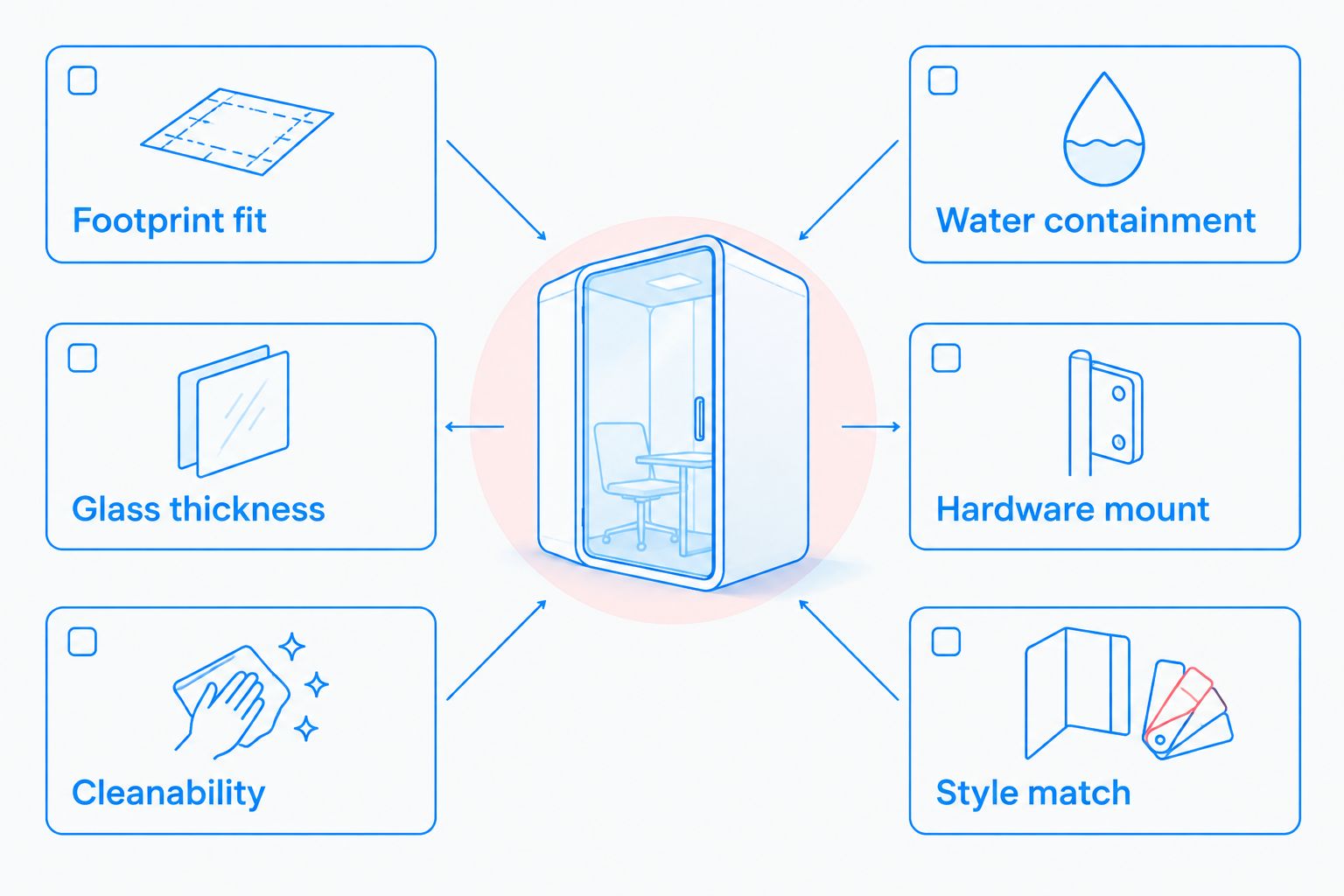
Rank every option against these six checks before you buy:
| Option | Best for | Standout feature | Key limitation |
|---|---|---|---|
| Custom frameless glass | Daily shower use | Clear sightlines, thick tempered panels | Needs precise measure and pro install |
| Custom framed glass | Period / traditional baths | Stronger channel support, classic lines | More frame to clean |
| Fixed glass splash panels | Open freestanding look | Minimal hardware, light visual weight | Partial spray control only |
| Circular curtain rod | Budget conversions | Full wrap, no glass cost | Fabric liner wears and mildews |
| Sliding / barn-style glass | Tight floor plans | Door stays in plane, saves swing space | Track must clear tub rim and feet |
| Freestanding glass screen | Rentals / reversible installs | No permanent wall channels | Weaker seal on three open sides |
A custom frameless enclosure wraps tempered panels around the clawfoot footprint — full or partial — with clamps, hinges, and floor or ceiling braces instead of a heavy perimeter frame. Panels are cut to the tub’s oval or rectangle so the glass follows the rim. This is the option that turns a showpiece tub into a real everyday shower in 2026 without a curtain.
Custom frameless glass pros:
Custom frameless glass cons:
Best for: Homeowners who shower daily in the clawfoot and want glass that looks built for the tub, not borrowed from a standard alcove.
Verdict: Buy when the tub stays freestanding or semi-freestanding and you want permanent water control. Century Shower Door builds this class of custom frameless work for California, Arizona, and Nevada homes.
Framed enclosures use metal channels on the panel edges. On a clawfoot conversion, the frame adds stiffness when wall returns are short or the tub sits farther from the walls. The look pairs with vintage tile, oil-rubbed bronze, and classic feet better than ultra-minimal clamps.
Custom framed glass pros:
Custom framed glass cons:
Best for: Period bathrooms where the metal frame is part of the design, not something to hide.
Verdict: Buy for style-matched renovations; Hold if you want maximum glass and minimum metal.
One or two fixed tempered panels sit at the wettest sides of the tub — usually the wall-adjacent long side or the showerhead end. No door swing. You step in past the open end. Water control is partial by design; the goal is splash reduction, not a sealed wet room.
Fixed splash panel pros:
Fixed splash panel cons:
Best for: Owners who want to keep the sculpture of the freestanding tub and only need splash control at the showerhead.
Verdict: Buy for light-use showers; Skip if you need full containment.
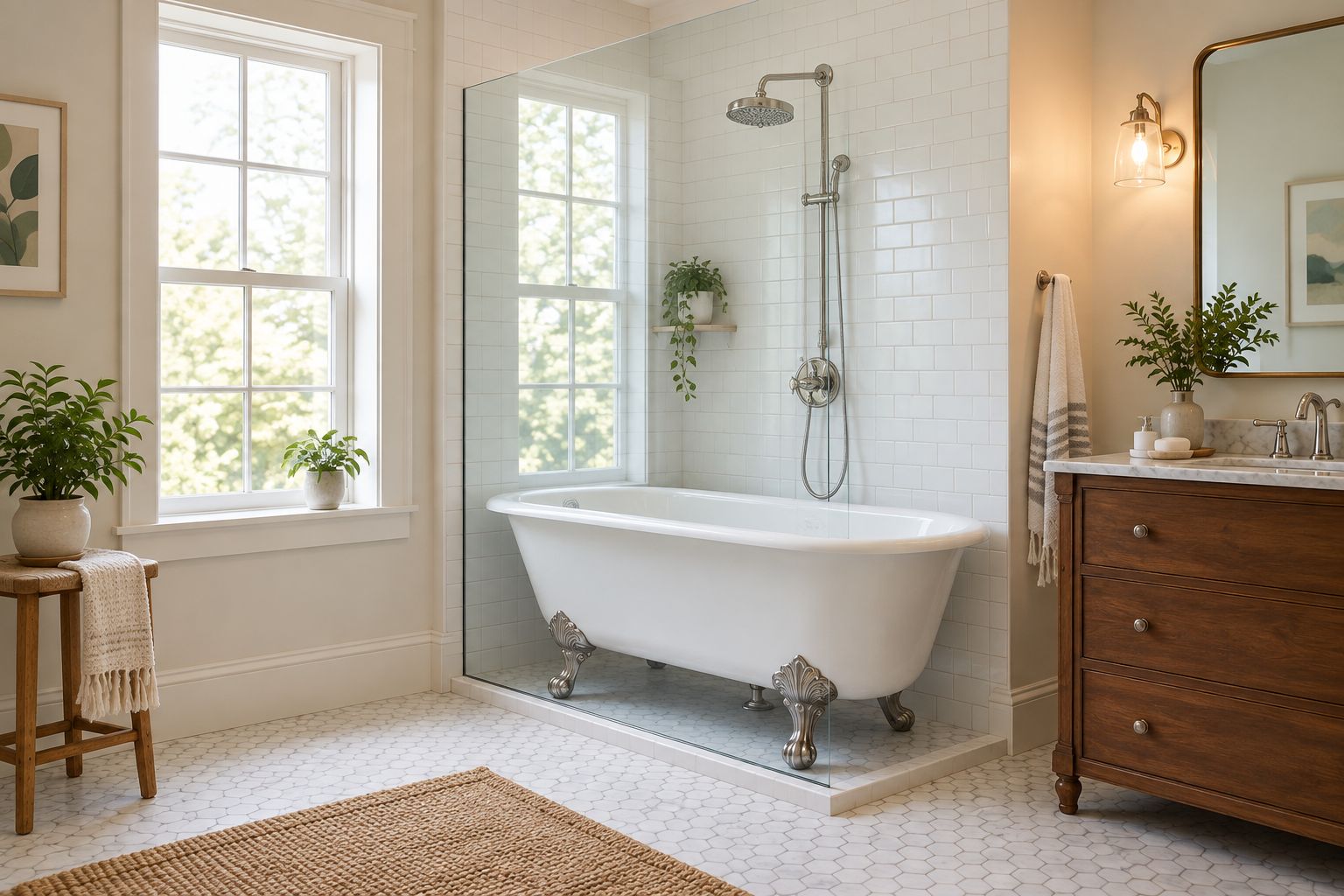
A curved or oval ceiling- or wall-mounted rod carries a waterproof liner around the tub. No glass. This is still the default low-cost path for true freestanding clawfoots in 2026, especially rentals and staged homes.
Circular curtain rod pros:
Circular curtain rod cons:
Best for: Budget conversions, rentals, and anyone not ready to commit to glass.
Verdict: Buy as a stopgap; plan to upgrade if the tub becomes the house’s primary shower.
A sliding or barn-track panel runs parallel to the long side of the tub so the door never swings into a narrow bath. Custom brackets clear the rim and the claw feet. This layout borrows from walk-in barn doors but must be engineered around a freestanding footprint, not a standard curb.
Sliding / barn-style glass pros:
Sliding / barn-style glass cons:
Best for: Small bathrooms where a hinged panel would hit the vanity, toilet, or opposite wall. For related layout ideas on compact glass, see frameless shower door styles for small bathrooms.
Verdict: Buy when swing space is the blocker; measure the track path twice.
A single tempered screen stands on adjustable feet or a slim floor channel beside the tub. No full enclosure. It is the glass version of a hotel tub screen — useful, reversible, and limited.
Freestanding glass screen pros:
Freestanding glass screen cons:
Best for: Renters and reversible remodels where the landlord blocks permanent channels.
Verdict: Hold for light splash only; Skip as a primary daily shower solution.
Ranking followed the six criteria above in order: footprint fit, water containment, glass thickness and safety, mount path, cleanability, then style match. Full custom frameless scored highest on daily-use containment and sightlines. Framed custom won on period style and edge support. Fixed panels, curtains, sliders, and screens filled narrower jobs. Stock alcove tub doors never cleared the footprint-fit bar, so they stay off this list. For a broader conversion path that starts from a built-in tub instead of a clawfoot, read the guide on shower door options for tub-to-shower conversions.
Get a free in-home estimate
Custom framed and frameless fit to your clawfoot — CA, AZ, and NV.
Default pick in 2026: custom frameless glass. It is the best shower doors for clawfoot tub conversion choice when the tub is the main shower and you want permanent containment without a curtain. Choose custom framed glass when the bathroom’s metal finishes and period detail call for visible channels. Choose fixed splash panels when you only need to tame the showerhead side. Choose a circular rod when budget or a rental lease blocks glass. Choose sliding glass when the room is too narrow for a swing. Choose a freestanding screen only for light, reversible splash control.
If you are in California, Arizona, or Nevada and the tub needs true custom glass, Century Shower Door handles measure, manufacture, and install — family owned and operated since 1945, with free in-home estimates. Pair finished glass with the right bottom sweep and side seal so the first year of showers stays dry; maintenance parts matter as much as the panel order.
What are the best shower doors for clawfoot tub conversion in 2026?
Custom frameless glass enclosures rank best overall for daily shower use. Custom framed glass fits period baths; circular curtain rods remain the budget path.
Can you put a glass shower door on a freestanding clawfoot tub?
Yes — with custom panels, clamps, and floor or ceiling braces sized to the tub footprint. Stock alcove tub doors do not fit freestanding rims.
Is frameless or framed glass better for a clawfoot conversion?
Frameless wins for clear sightlines and easier channel cleaning. Framed wins when you want stronger edge support and a traditional metal look.
Do clawfoot tub shower conversions need custom glass?
Almost always. Oval rims, exposed feet, and missing side walls break standard kit dimensions, so panels and hardware are cut to the tub.
How thick should glass be on a clawfoot shower enclosure?
Use tempered glass at 3/8 inch or 1/2 inch for fixed panels and doors. Thinner decorative glass is not rated for wet-area door loads.
Will a shower curtain work instead of glass on a clawfoot tub?
A circular rod and liner works as a budget wrap. Expect more overspray and faster liner wear than sealed glass panels.
What seals stop leaks on clawfoot glass enclosures?
Bottom door sweeps and side polycarbonate seals close the gaps at the rim and strike edge. Replace worn sweeps before water reaches the floor.
Who installs custom clawfoot shower glass in California, Arizona, and Nevada?
Century Shower Door manufactures and installs custom framed and frameless enclosures in those states and offers free in-home estimates.
The clawfoot’s porcelain rim is not a standard curb. Every hinge, clamp, and sweep has to respect that curve — or you will chase a slow leak at the exact spot the installer “made work.” Measure the rim oval, the floor anchors, and the showerhead spray radius before you lock a door style. The glass is the easy part once the footprint is honest.


