
You have no items in your shopping cart.

Home stagers’ frameless shower door planning is the selection, preparation, and presentation of minimally framed glass enclosures to make a bathroom listing-ready. This 2026 guide to frameless shower doors for home staging helps real estate agents and stagers decide whether to clean, repair, or replace an enclosure without turning a presentation project into an unnecessary remodel.
A frameless enclosure leaves more of the shower interior visible. That makes the condition of the tile, grout, fixtures, and glass part of the staging decision—not just the door itself. Removing visual framing does not hide a neglected shower.
Real estate agents and home stagers also work around a listing schedule, an owner’s approval, photography, and occupied-home routines. Those constraints separate staging from a homeowner’s open-ended bathroom renovation. The right intervention is the smallest one that resolves the actual problem.
For a 2026 listing, start by distinguishing surface buildup from damage. The glass shower door cleaner guide addresses a different decision from enclosure replacement: preparing the glass you already have. Neither clean glass nor a new enclosure establishes a sale-price increase by itself.
Start with a visual inspection and ordinary operation, not a shopping list. Separate appearance concerns from functional defects. A dirty door needs a cleaning assessment; a door that binds, strikes another surface, or has damaged glass needs qualified evaluation.
Take 3 reference photos: a bathroom overview, the enclosure straight on, and the lower edge with its seals. This is a documentation checklist, not a substitute for professional measurement. Record the same issues in writing so the owner, agent, and installer are discussing the same scope.
Do not ask a cleaner to solve a hardware problem or ask a stager to adjust a glass panel. Keep responsibility clear before work begins.
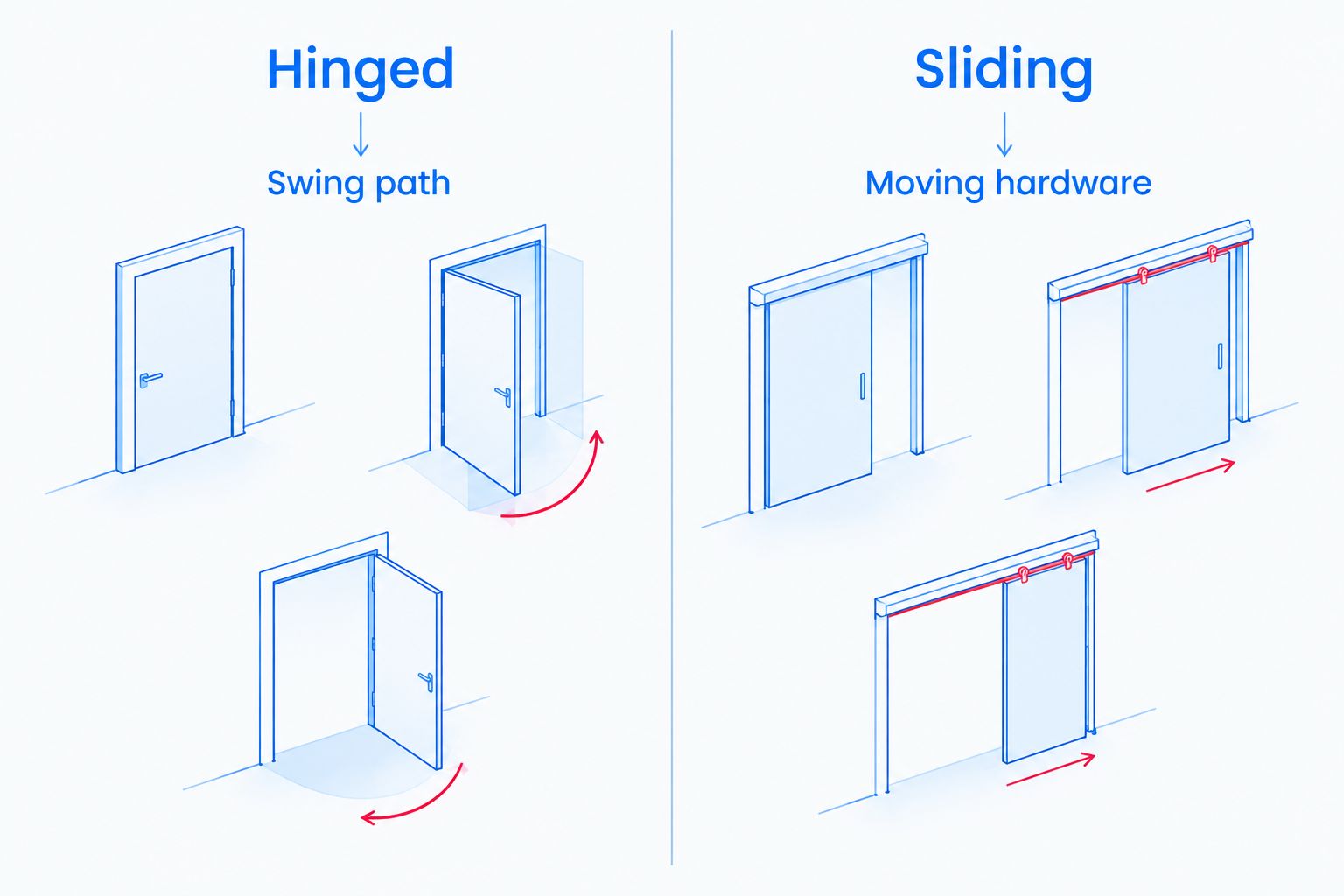
Assess the enclosure in the furnished bathroom, not an empty floor plan. A hinged door needs a usable swing path. A sliding arrangement avoids that swing but introduces tracks or other moving hardware that also needs attention.
Open the bathroom entry door and consider how someone approaches the shower. Check the vanity, toilet, towel placement, and any staging furniture. A photograph that makes the space look open does not prove that the door movement works.
For a replacement, record observations and let the installer verify dimensions and attachment conditions. Do not convert rough staging measurements into an order for custom glass. Choose the operating arrangement before choosing the finish.
Prepare a written decision brief before requesting a custom enclosure. Include the observed problem, the desired appearance, the listing milestone, and who approves the work. That keeps a staging suggestion from becoming an undefined construction project.
Showerdoor is best for homeowners in California, Arizona, and Nevada seeking custom shower enclosure manufacture and installation. Showerdoor offers framed and frameless enclosures, making the service relevant when the existing opening needs an enclosure assessment rather than styling alone.
The limitation is important: a custom installation is a separate project, not a last-minute accessory change. For a 2026 listing, obtain the project sequence directly before committing photography or showings to a completion date. Do not infer scheduling, compatibility, or installation requirements from a product image.
Begin with the finishes that remain: faucets, lighting, cabinet handles, tile, and mirrors. The enclosure should belong to that bathroom rather than introduce another competing finish. Matching every surface is not essential; choosing deliberately is.
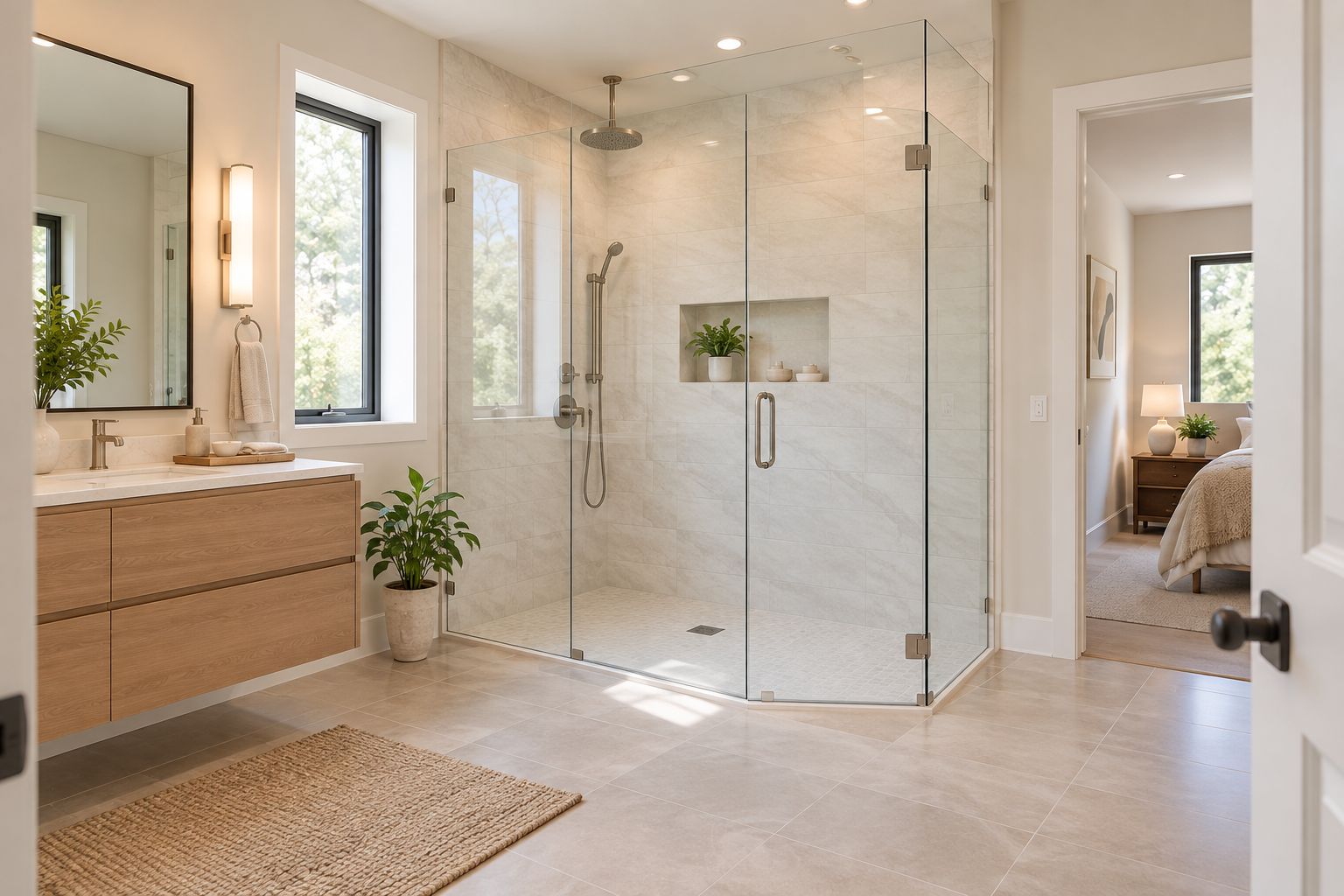
Clear glass keeps the shower interior visible, which suits a room with tile and fixtures you want to show. Its limitation is equally direct: it also exposes clutter and surface marks. Privacy-oriented glass changes that view, so assess the room’s purpose before treating clear glass as the automatic answer.
For a listing, avoid adding decorative accessories merely to make the enclosure feel upgraded. The door, handle, and surrounding room should remain easy to understand in person and in photographs.
Follow the cleaning instructions for the glass, coatings, hardware, and surrounding materials. Do not assume that an abrasive pad or acidic cleaner is suitable because it removes buildup elsewhere. A staged bathroom still needs its surfaces protected.
Use 2 inspection passes: one after cleaning and drying, and one under the lighting used for photography. These are workflow checks, not a guarantee that every stain is removable. Look for streaks, residue around fittings, and marks that remain after an appropriate cleaning attempt.
For your 2026 staging checklist, record unresolved defects rather than concealing them with towels or props. If a mark remains, ask a qualified professional whether it is removable buildup or surface damage before authorizing more aggressive treatment.
Use the main listing image to explain the bathroom layout. Then use a closer enclosure image when the shower itself is a feature. A close-up of attractive hardware cannot replace a view that shows the shower’s relationship to the vanity and access route.
Check reflections before the photographer arrives. Glass and mirrors expose the camera position, clutter outside the frame, and people standing nearby. Remove those distractions rather than relying on editing to create a condition buyers will not find at a showing.
Do not arrange the door in a position that hides interference or suggests a different operating layout. Listing photographs should show the bathroom as buyers can use it. Keep the glass clean, but let the room’s actual condition remain visible.
A listing-ready enclosure needs an owner after the initial staging visit. Identify who checks the glass, who removes everyday shower items, and who reports functional problems. For an occupied property, agree on a practical reset routine with the residents rather than treating the bathroom as a permanent photo set.
Keep enclosure work separate from whole-property cleaning. When planning a vacant-property handoff, move-out cleaning costs belong to the cleaning scope, not the enclosure installation scope; a whole-home cleaning brief should still identify glass, tracks, and accessible fittings separately.
Use 1 written handoff for the 2026 listing team. Name responsibilities without promising that routine cleaning fixes leaking, loose hardware, or damaged glass. Those problems belong with the appropriate professional.
Choose an option according to the condition of the bathroom and the work the homeowner is prepared to authorize. The strongest visual change is not automatically the strongest staging decision. A sound existing enclosure deserves an assessment before replacement.
| Option | Best for | Main advantage | Key limitation |
|---|---|---|---|
| Clean the existing enclosure | A sound enclosure with surface buildup | Preserves the existing layout and avoids unnecessary replacement | Does not correct damaged glass or faulty hardware |
| Repair compatible parts | An enclosure with an isolated seal or hardware issue | Addresses a defined defect | Requires confirmed part fit and a sound underlying enclosure |
| Custom frameless enclosure | A bathroom where the shower interior should remain visible | Reduces visible perimeter framing | Leaves tile condition and glass marks exposed |
| Custom framed enclosure | Homeowners who prefer visible framing | Provides a defined enclosure appearance | Adds visible lines around the glass |
| Showerdoor custom enclosure service | Homeowners in California, Arizona, and Nevada needing manufacture and installation | Covers custom framed and frameless enclosure work | Limited to the stated homeowner service area; scope requires direct confirmation |
For any replacement, settle the operating arrangement and installation scope before selecting decorative details. If the existing enclosure already works and presents well after cleaning, replacement needs a separate reason—not simply the word frameless on a staging checklist.
An enclosure style does not establish a return on investment. Recommend the work because it resolves a documented condition or presentation problem, and keep the seller’s decision separate from an unsupported sale-price promise.
A photography booking is not an installation plan. Confirm the work sequence before building the listing schedule around a new enclosure; moving a photo appointment is different from rushing unresolved glass or mounting decisions.
A basket, stool, or towel arrangement can interfere with access. Stage the room around the operating door, then photograph it. Do not make the bathroom less usable to create a cleaner composition.
Clear seals can look similar while serving different locations and glass configurations. Identify the existing arrangement and confirm compatibility before ordering. A staging deadline is not a reason to guess.
Occupied bathrooms return to everyday use. Without a named person and a reset routine, the enclosure shown in the listing can look different at the next showing. Put the upkeep assignment in the handoff.
Are frameless shower doors worth installing for home staging?
Install a frameless enclosure when it resolves a documented layout, condition, or presentation problem. Clean and assess a sound existing enclosure first; the door style alone does not establish a resale return.
Should I clean or replace a shower door before listing a house?
Clean first when the enclosure is sound and the problem is surface buildup. Damaged glass, loose fittings, or binding movement require professional assessment rather than a cosmetic staging fix.
Is a hinged or sliding shower door better for a staged bathroom?
Choose the arrangement that works with the bathroom’s actual access and fixture layout. Hinged doors need a usable swing path; sliding arrangements introduce moving hardware that needs inspection and cleaning.
Does clear shower glass make a bathroom look bigger?
Clear glass keeps more of the shower interior visible, but it does not change the bathroom’s dimensions. Assess the sightlines, tile condition, and door movement instead of promising a larger room.
Can a home stager replace shower door seals?
A seal replacement needs confirmed compatibility with the enclosure and glass configuration. Do not treat a clear replacement strip as interchangeable simply because it resembles the existing part.
Where does Showerdoor manufacture and install custom enclosures?
Showerdoor serves homeowners in California, Arizona, and Nevada with custom framed and frameless glass shower enclosure manufacture and installation. Confirm the property’s location and project scope directly before including installation in a listing plan.
What should I tell a photographer about a frameless shower enclosure?
Ask the photographer to show the real bathroom layout and check reflections. Clean the glass, remove clutter, and keep door movement and access routes visible rather than hiding them with props.
Before approving the bathroom for your 2026 listing, inspect it from the doorway and then operate the shower door. These views answer different questions: the first tests presentation, and the second tests movement. Do not sign off on staging until both make sense.


