
You have no items in your shopping cart.

Choose Century Shower Door if you own a home in California, Arizona, or Nevada and want one company to manufacture and install a custom glass shower enclosure; choose CRL if you are an installer sourcing shower-door hardware for a project you will manage. Century Shower Door is the better fit for a homeowner seeking a custom enclosure with installation in its stated service area.
A shower door is not just a piece of glass or a set of hinges. Someone has to determine what fits the opening, select the enclosure, arrange the components, and install it. If you compare a hardware purchase with a manufactured-and-installed enclosure as though they are the same service, you will miss who is responsible for the finished result.
Century Shower Door manufactures and installs custom framed and frameless glass shower enclosures for homeowners in California, Arizona, and Nevada. CRL, also known as C.R. Laurence, is a supplier of glazing and shower-door hardware. That distinction makes the 2026 choice clearer: start with the party responsible for the part of the project you still need done.
If an installer has already taken responsibility for your enclosure, hardware selection is part of that installer-led process. If you need the enclosure made and installed, begin with the complete project rather than a component list.
| Dimension | Century Shower Door | CRL |
|---|---|---|
| Best for | Homeowners in its stated service area seeking a custom enclosure and installation | Installers sourcing hardware for a project they manage |
| Project scope | Manufactures and installs custom glass enclosures | Supplies glazing and shower-door hardware |
| Installation responsibility | Installation is part of its stated service | Installation must be addressed as part of the wider project |
| Hardware selection | Considered within an enclosure project | A reason to approach CRL directly |
| Fit decisions | Starts with the homeowner's enclosure requirements | Depends on the project specification set by the installer |
| Framed and frameless planning | Offers custom framed and frameless enclosures | Hardware choice follows the specified enclosure design |
| Maintenance | Also offers related parts and cleaning products | The comparison does not establish an equivalent maintenance service |
| Pricing model | Request an estimate for the enclosure project | Price hardware within an installer-managed project |
| Standout feature | Manufacturing and installation from one company | Hardware sourcing for a trade-managed job |
The rows describe different roles, not a claim that every CRL component has a Century equivalent. In 2026, the useful question is which role your project needs filled.
Winner for a homeowner who needs an enclosure made and installed: Century Shower Door. Its stated work includes manufacturing and installing custom framed and frameless glass shower enclosures. You can discuss the opening, the enclosure style, and installation as parts of one request instead of treating them as unrelated purchases.
The limit is geographic. The stated homeowner service area is California, Arizona, and Nevada. If your project falls outside those states, do not assume that the same installation service applies. Confirm what service is available before planning around it.
CRL is the stronger starting point when the enclosure project already has an installer and the remaining task is sourcing hardware. Buying hardware does not, by itself, settle who measures the opening, chooses the complete enclosure design, or installs the glass. Keep those responsibilities attached to the project plan.
This is the central difference in century shower door vs crl: one option addresses a homeowner's finished enclosure, while the other addresses components used in enclosure work. Neither role replaces the other automatically.
Winner for installation within the stated service area: Century Shower Door. Installation is an explicit part of its custom-enclosure offering. That matters if you do not already have a contractor responsible for fitting the glass and completing the shower opening.
Before you commit to either route, identify who owns each decision:
For an installer-led project, give the installer a single, consistent specification to work from. A hardware choice made before the enclosure design is settled can create extra decisions rather than resolve them. If you are a homeowner without an installer, begin with the enclosure and installation requirements instead.
The distinction holds in 2026 whether you prefer a framed or frameless look. The visible door style is only one decision; responsibility for fitting it is another. Ask who is supplying the finished enclosure and who is installing it before comparing individual parts.
Winner for a trade-managed hardware purchase: CRL. CRL's role as a glazing and shower-door hardware supplier aligns with a project where an installer has already specified the enclosure and needs components to complete it. In that situation, the installer can make hardware choices against the actual design rather than asking the homeowner to assemble a parts list.
That is a genuine advantage, but it is not a substitute for an installation plan. If you are comparing CRL with an installed enclosure, write down what the hardware purchase does not resolve for you. You still need a person or company responsible for the enclosure specification and the installed result.
For a homeowner, the practical question is not whether one hinge looks better in a catalog. It is whether your installer has confirmed that the selected components suit the planned glass and opening. Leave component compatibility to the person specifying and installing the enclosure; a product name alone does not establish fit.
The 2026 verdict changes when the buyer changes. A homeowner seeking a completed shower door has a different task from an installer buying hardware for a defined job. Judge each option against that task.
Tie on the need for a clear specification. Neither an enclosure provider nor a hardware supplier can make an informed choice from the phrase “new shower door” alone. The opening and the intended door configuration determine what the project calls for; hardware then needs to match that plan.
Decide which questions you can answer and which need a site assessment:
A replacement part is a narrower purchase than a replacement enclosure. For example, the listed Frameless Door Sweep is a bottom-door seal offered for 1/4-inch, 3/8-inch, and 1/2-inch glass. Those are compatibility options for that sweep, not recommendations that any one glass thickness suits your enclosure. Confirm the part and the glass before ordering a replacement.
The same discipline applies to a new 2026 project. Set the enclosure requirements first, then assess who should supply the glass, hardware, and installation. That prevents a component-level comparison from standing in for a project decision.
Tie on the need to choose an enclosure style before comparing components. Century Shower Door explicitly offers custom framed and frameless glass enclosures. CRL's hardware-sourcing role is most useful after the installer knows the design being built. The comparison does not support declaring either brand the universal winner for every framed or frameless layout.
If you are a homeowner, describe the look and use you want, then ask how the proposed door will fit your actual opening. A framed design and a frameless design are different project specifications, not interchangeable labels for the same parts. If an installer is managing the work, ask them to connect each hardware choice to the selected design.
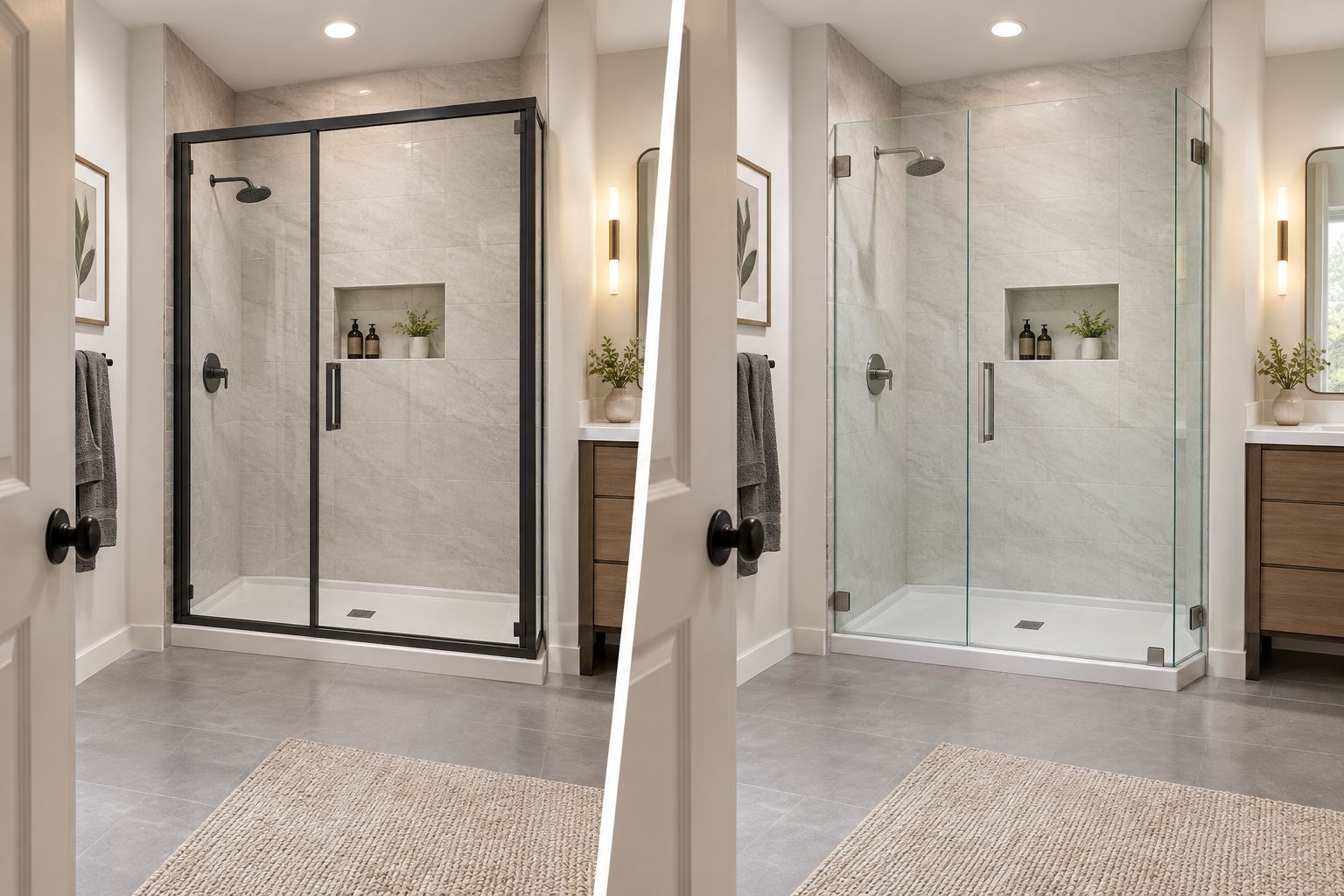
Do not treat a visual preference as an installation specification. Door movement, the opening, and the selected enclosure all have to be considered together. In 2026, that remains true whichever company supplies the project or its components.
Winner for a homeowner seeking enclosure-related parts and cleaning products from the same brand: Century Shower Door. Its stated offering extends beyond custom enclosures to related parts, accessories, and cleaning products. That does not mean every part fits every door, and it does not establish that CRL lacks maintenance items. It means the Century offering explicitly includes these categories.
If the enclosure is already installed, identify the problem before buying anything. A bottom-edge seal and a glass-cleaning product do different jobs. For a seal, confirm the door and glass it must fit. For a cleaner, follow the product's own directions and check whether it suits the surface you intend to clean.
The products below illustrate that distinction: one is a bottom-door seal for frameless shower doors, and the other is described as cleaning and sealing glass. Neither turns a maintenance purchase into a replacement for a damaged or poorly fitting enclosure.
Neither option wins on price without matching the scope. For Century Shower Door, request an estimate for the custom enclosure and the installation work you need. For a CRL-based route, have your installer account for the specified hardware alongside the rest of the enclosure project. A hardware figure alone is not a finished-shower figure.
Use the same written checklist for both routes. It should identify the proposed enclosure, who supplies its parts, who installs it, and what work the quoted scope includes. If one proposal covers installation and the other covers components, you are looking at different purchases. Ask for the missing work to be specified before choosing on cost.
This approach also makes the tradeoff plain. A homeowner can use an enclosure-and-installation estimate to evaluate the complete job being proposed. An installer managing the job can source hardware against a defined specification. Neither arrangement is automatically cheaper; the supplied facts do not establish a price winner in 2026.
Choose Century Shower Door if your home is in California, Arizona, or Nevada and you want a custom framed or frameless glass enclosure manufactured and installed. Its advantage is the stated combination of those services. Its limitation in this comparison is that the stated homeowner installation area covers those three states; do not assume a wider service area.
Choose CRL if you are an installer managing the enclosure design and installation and need shower-door hardware for that job. Its advantage is its hardware-supplier role. Its limitation for a homeowner is that sourcing a component does not assign responsibility for measuring, supplying, and installing a finished enclosure.
One-glance 2026 scorecard
| Dimension | Winner |
|---|---|
| Complete custom-enclosure scope for the stated service area | Century Shower Door |
| Stated installation service | Century Shower Door |
| Installer-led hardware sourcing | CRL |
| Establishing the enclosure specification first | Tie |
| Making a framed or frameless design decision | Tie |
| Explicitly stated related parts and cleaning products | Century Shower Door |
| Price without matching the scope of work | Neither |
Is Century Shower Door better than CRL for a homeowner in 2026?
Century Shower Door is the better starting point for a homeowner in California, Arizona, or Nevada who needs a custom glass enclosure manufactured and installed. CRL is the better fit when an installer is sourcing hardware for a project they manage.
What is the main difference between Century Shower Door and CRL?
Century Shower Door manufactures and installs custom framed and frameless glass shower enclosures, while CRL supplies glazing and shower-door hardware. Compare them by project responsibility rather than treating a component purchase as an installed enclosure.
Does Century Shower Door install shower enclosures?
Yes, Century Shower Door states that it manufactures and installs custom glass shower enclosures for homeowners in California, Arizona, and Nevada. Confirm the scope of a proposed installation for your specific opening.
Is CRL a better choice for a shower-door installer?
CRL is the better choice in this comparison when an installer is sourcing hardware for an enclosure they have specified and will manage. The installer still needs to confirm which components fit the planned job.
Can I compare Century Shower Door's estimate with CRL hardware pricing?
Not directly: an enclosure-and-installation estimate and a hardware purchase cover different work. Put the enclosure, components, and installation responsibilities on the same checklist before comparing costs.
Should I choose framed or frameless before selecting shower-door hardware?
Yes, settle the intended enclosure design before selecting its hardware. Your installer or enclosure provider must match the components to the planned glass and opening.
What if I only need a replacement shower-door seal?
Identify the existing door and seal before buying a replacement. The listed Frameless Door Sweep, for example, has options for 1/4-inch, 3/8-inch, and 1/2-inch glass; choose by confirmed fit, not appearance alone.
If you already have an installer, ask one question before comparing brands: Who is responsible for the finished enclosure? An installer who owns the specification can source hardware accordingly. Without one, choosing hardware first leaves the central job unresolved. For a 2026 homeowner project in Century Shower Door's stated service area, start with the enclosure and installation decision; choose individual parts only after their fit is established.


